14 Living Room Kitchen Open Concept Ideas You’ll Actually Want to Try
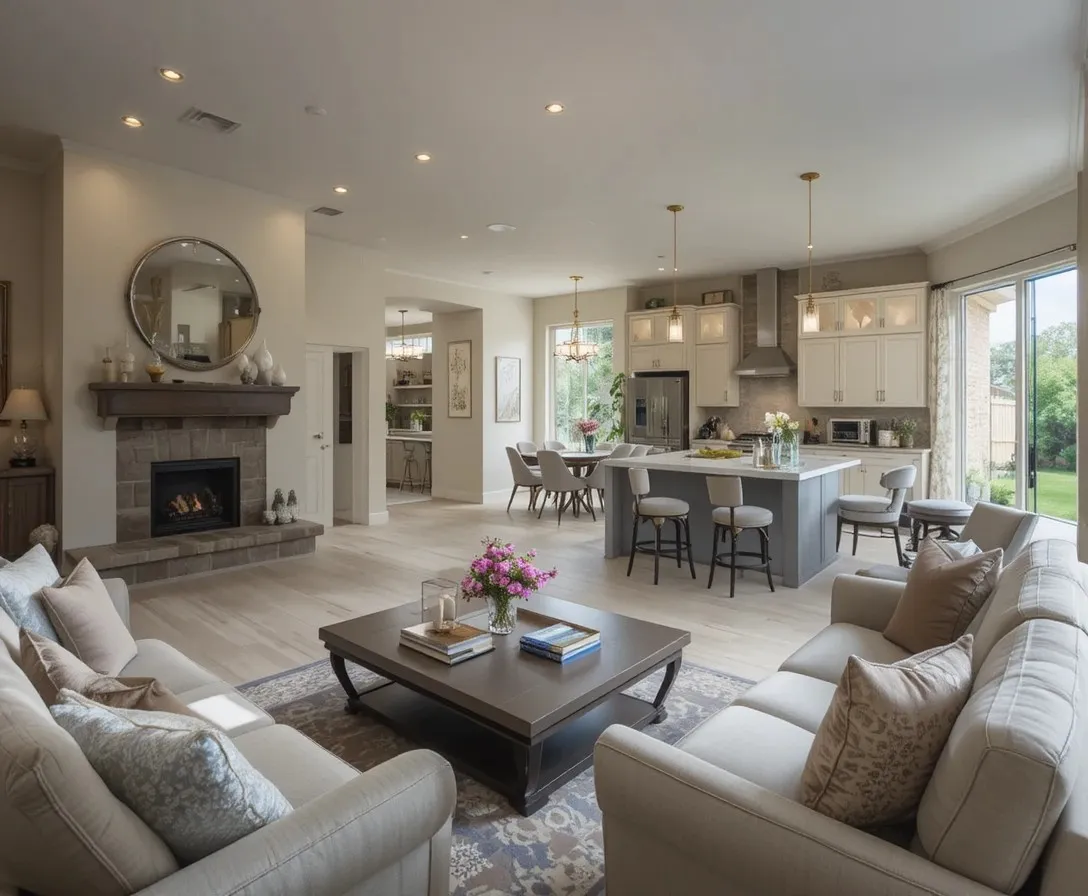
Imagine cooking dinner while still being part of the conversation. No more disappearing into a closed-off kitchen while everyone else laughs in the living room. Open concept spaces do something beautiful — they bring your home to life. They make small spaces feel generous and busy homes feel connected. If you’ve been dreaming about knocking down that wall or simply making your living room kitchen open concept flow better, these 14 real, practical ideas are exactly where to start.
Use One Color Palette

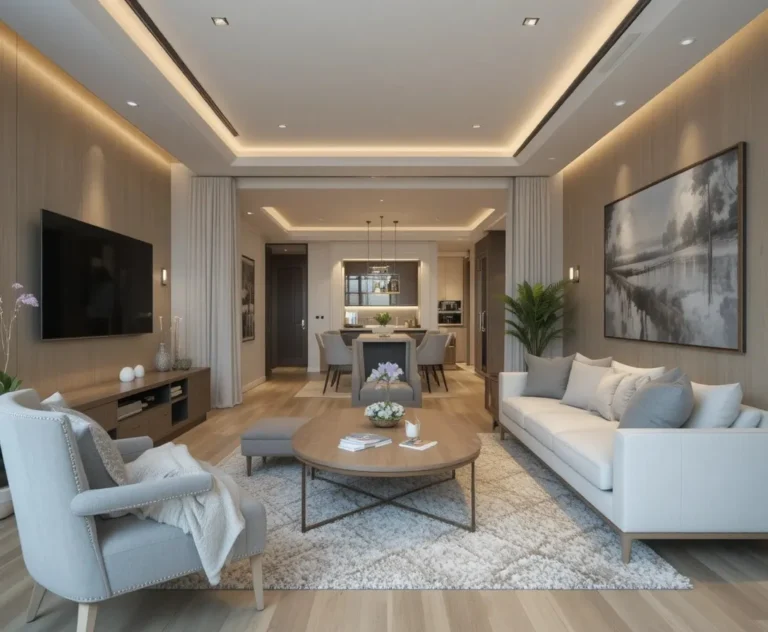
The fastest way to make an open space feel intentional is to keep colors consistent. Choose two or three shades and repeat them across both areas — a warm greige on walls, cream on cabinets, and natural wood tones throughout.
When colors flow from kitchen to living room without a jarring change, the eye travels smoothly and the space feels larger and more designed. It doesn’t need to be identical — just related.
Tip: Use the same wall color in both areas but vary the texture through materials like tile, wood, and fabric.
Define Zones with Rugs
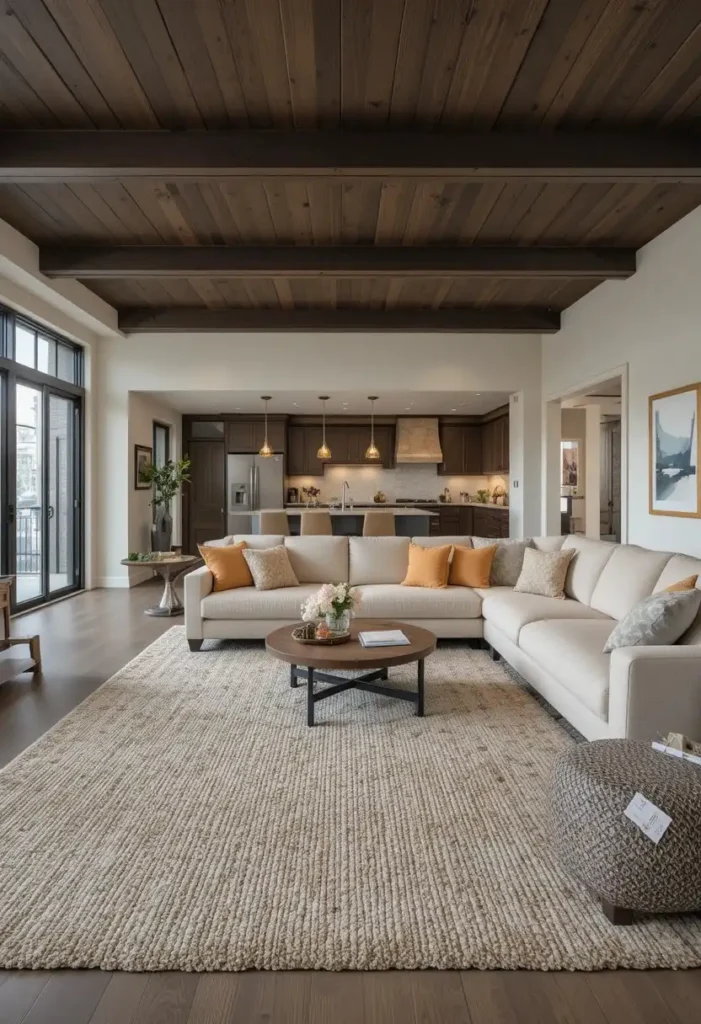
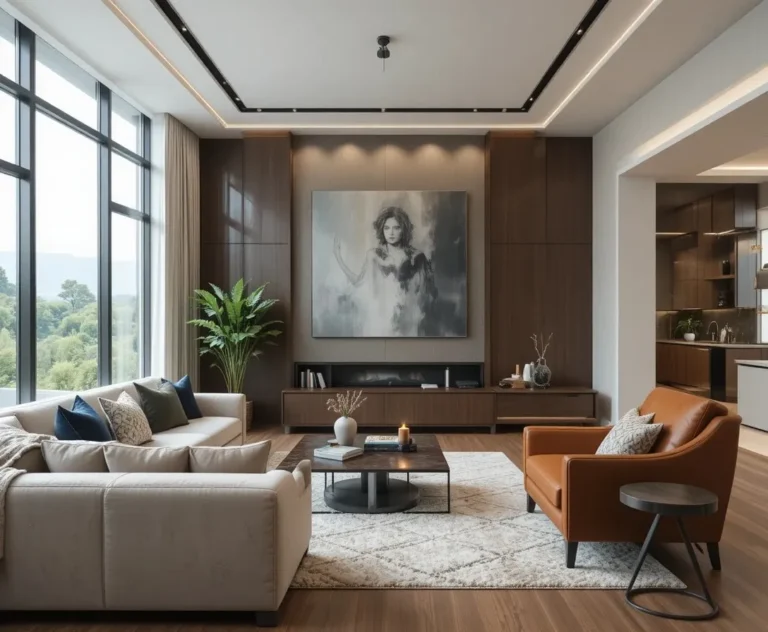
In an open layout, a rug is your best friend. It quietly says this is the living area without building a single wall. A large area rug anchored under your sofa and coffee table instantly creates a distinct, cozy zone.
Choose a rug with at least one color pulled from your kitchen — a warm terracotta, a soft sage, or a creamy neutral — to keep both spaces visually connected while clearly separated.
Tip: Go bigger than you think. A rug that’s too small makes a room feel unfinished and disconnected.
Try a Kitchen Island as Divider
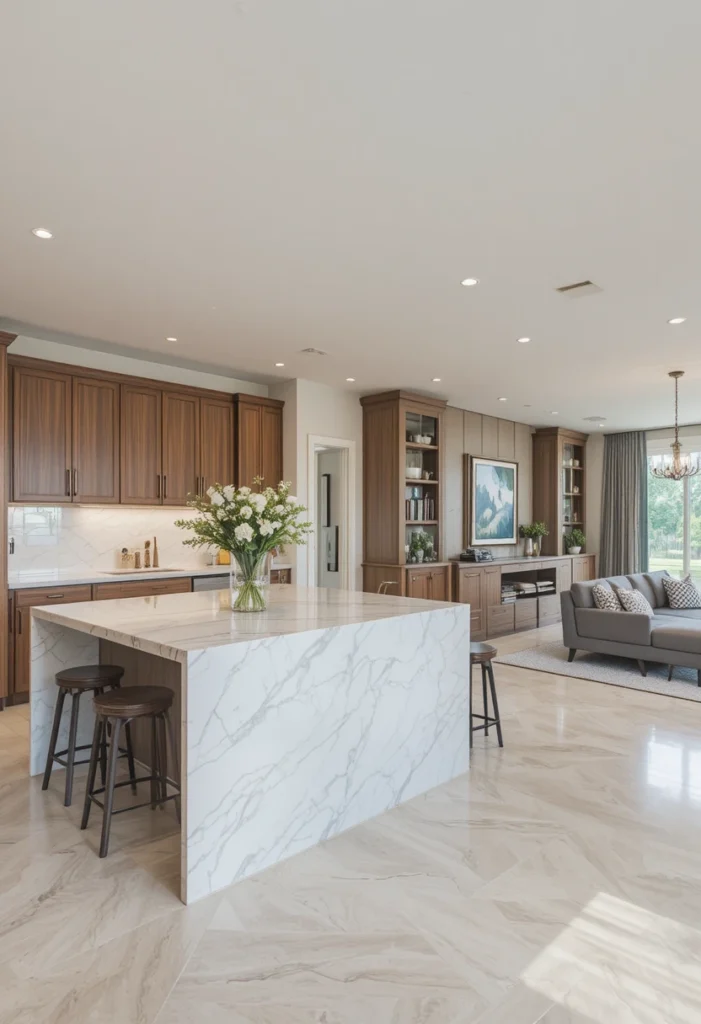
A kitchen island does triple duty in an open concept layout — its prep space, dining area, and the natural dividing line between cooking and living zones.
Add bar stools on the living room side and suddenly you have a casual spot for morning coffee, homework, or chatting while dinner is made. It creates connection rather than separation. Choose a waterfall edge in marble or butcher block for a look that’s both functional and genuinely beautiful.
Tip: Keep the island clutter-free — it’s the visual centerpiece of your entire open space.
Match Your Flooring Throughout
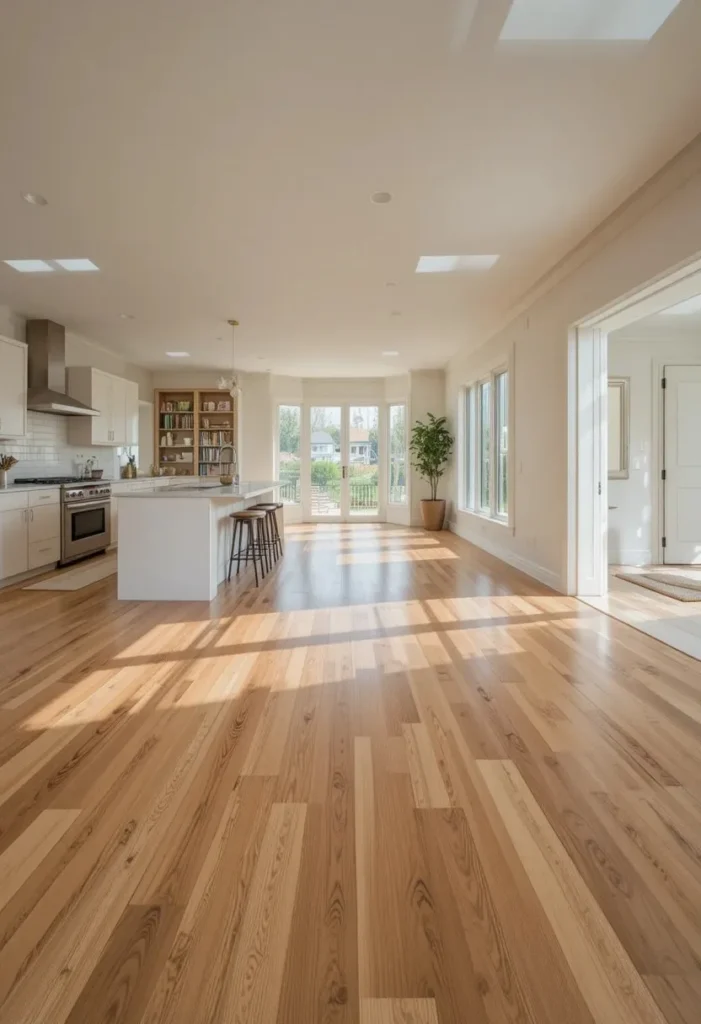
Nothing unifies an open concept space like continuous flooring. When the same hardwood, luxury vinyl, or large-format tile runs from the kitchen straight into the living room, the whole area reads as one generous, flowing space.
Broken flooring — where kitchen tile meets living room carpet at an awkward seam — visually chops the space and makes it feel smaller than it actually is. Continuity is everything in open layouts.
Tip: Warm oak-toned flooring works beautifully in both kitchen and living spaces — it’s forgiving, timeless, and suits almost every style.
Hang One Long Pendant Light

Lighting is one of the most underused tools in open concept design. A single long pendant light — or a row of pendants — hung over your island or dining area creates an immediate focal point that anchors the kitchen zone beautifully.
It draws the eye, defines the space, and adds personality without taking up any floor room. Choose a style that echoes your living room lighting for a cohesive, curated feel.
Tip: Warm-toned bulbs (2700K) across all light fixtures make an open space feel unified and cozy after dark.
Build a Half-Wall Instead
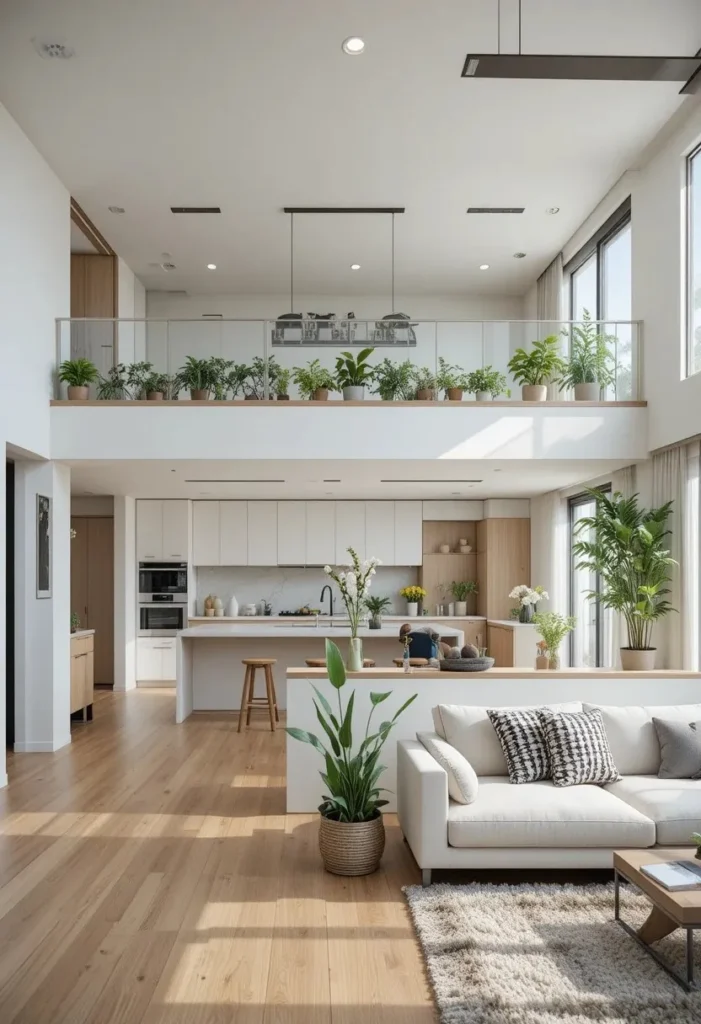
Not ready to go fully open? A half-wall — sometimes called a pony wall — gives you the best of both worlds. It maintains a sense of separation while still allowing light, conversation, and visual connection to flow freely.
Top it with a wooden ledge and it doubles as a display shelf, a breakfast bar, or a spot for trailing plants. It’s an affordable, less intimidating step toward open concept living.
Tip: Keep the half-wall the same color as surrounding walls so it feels intentional rather than leftover.
See More Ideas: 15 Green Leather Couch Living Room Ideas That Are Bold, Beautiful and Totally Doable
Use Open Shelving to Connect Both Spaces

Open shelving on the kitchen side of a shared wall creates a visual bridge between cooking and living areas. Style it with a mix of practical items — cookbooks, ceramic bowls, glass jars — and decorative pieces that echo your living room’s personality.
It softens the kitchen’s hard edges and introduces warmth and character. When both spaces share similar styling on their shelves, the whole layout feels thoughtfully designed.
Tip: Leave breathing room on shelves — overcrowding kills the effect and makes everything look messy.
Add a Cohesive Open Concept Living Room Kitchen Feel with Similar Textures

Texture is the secret ingredient most people forget. When your kitchen has matte cabinet fronts, bring matte finishes into your living room through cushions, throws, or lampshades. When your kitchen features warm wood, echo it in your coffee table or shelving.
Matching textures across both spaces creates a quiet harmony that feels intentional without looking too coordinated or staged. It’s the difference between a space that looks decorated and one that feels designed.
Tip: Choose three textures — wood, linen, and ceramic work beautifully — and repeat them in both zones.
Paint Your Kitchen Cabinets to Match the Mood
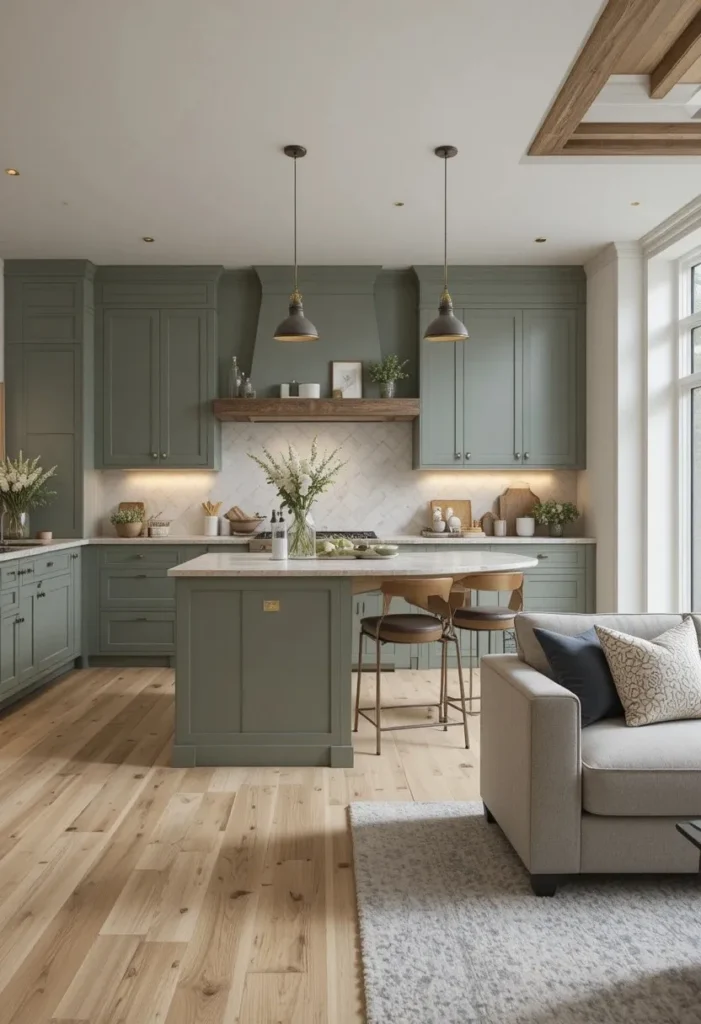
Your cabinet color sets the emotional tone for the entire open space. Deep navy cabinets bring drama and sophistication. Sage green feels calm and organic. Warm white keeps things fresh and timeless.
Whatever you choose, make sure it converses with your living room’s wall color rather than competing with it. In an open layout, these two elements are always in the same frame. They need to get along.
Tip: If your living room walls are bold, keep cabinets neutral — and vice versa. Let one area lead, the other follow.
Create a Dining Zone in Between
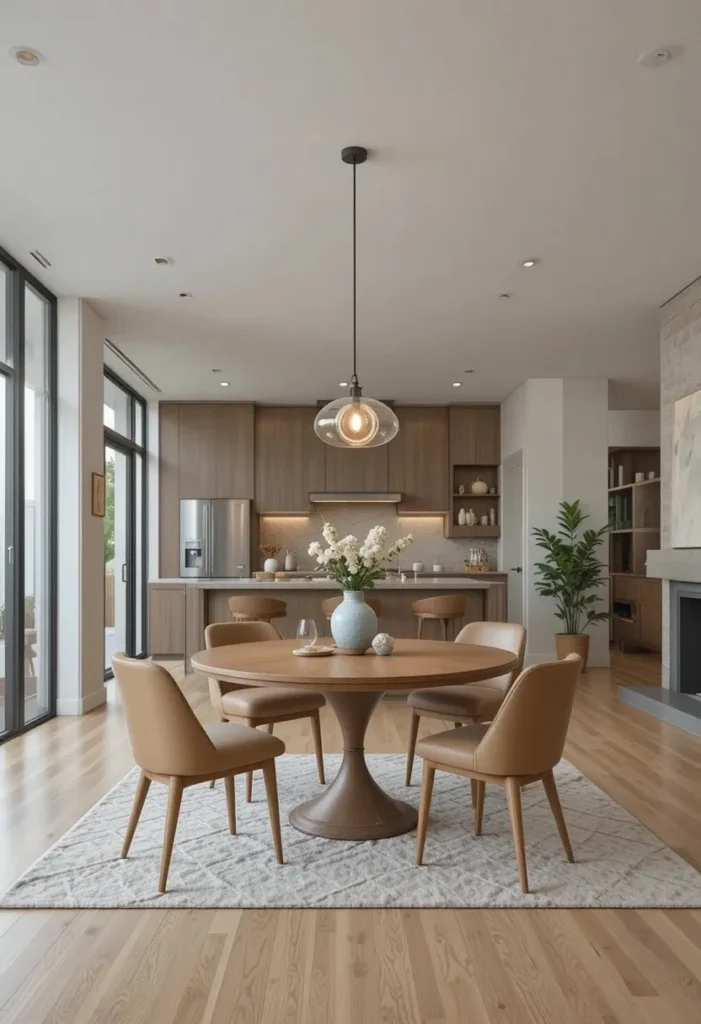
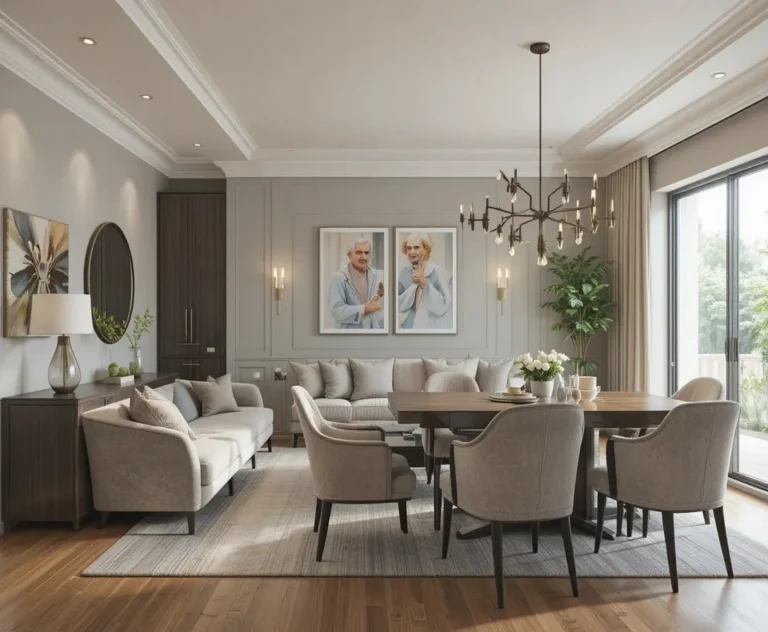
The space between kitchen and living room is prime real estate — and a dining table placed there does something magical. It becomes the natural connector, the transitional zone that belongs to both areas equally.
A round table works especially well — no sharp corners, easy traffic flow, and it softens the geometry of open layouts beautifully. Add a statement pendant above it and it becomes the heart of the whole space.
Tip: Choose dining chairs that borrow design elements from both your kitchen and living room for a truly cohesive look.
See More Ideas: 14 Paint Colors for Living Room Ideas That Will Transform Your Space
Use Plants to Soften the Layout
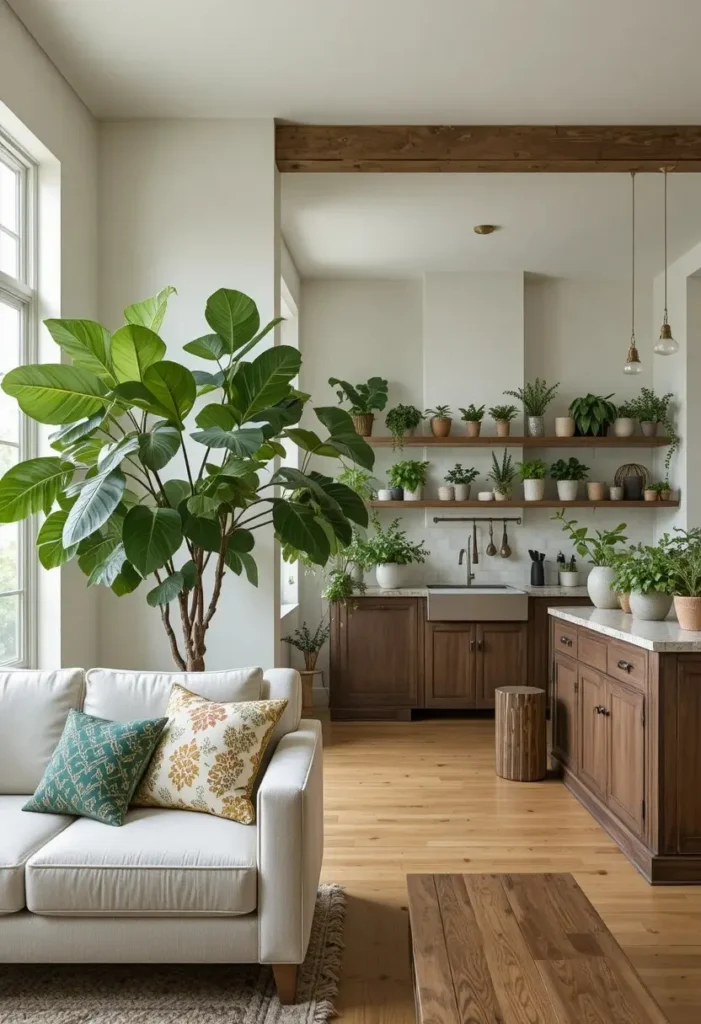
In an open concept space, plants do quiet but powerful work. A tall fiddle leaf fig beside the sofa, trailing pothos on kitchen shelves, and a small herb pot on the island — together they stitch both zones into one breathing, living space.
Greenery softens hard kitchen surfaces, adds warmth to living areas, and creates a sense of organic flow that no piece of furniture quite manages on its own.
Tip: Group plants in odd numbers — one large, one medium, one small — for arrangements that feel naturally balanced rather than symmetrical.
Keep Your Backsplash Simple
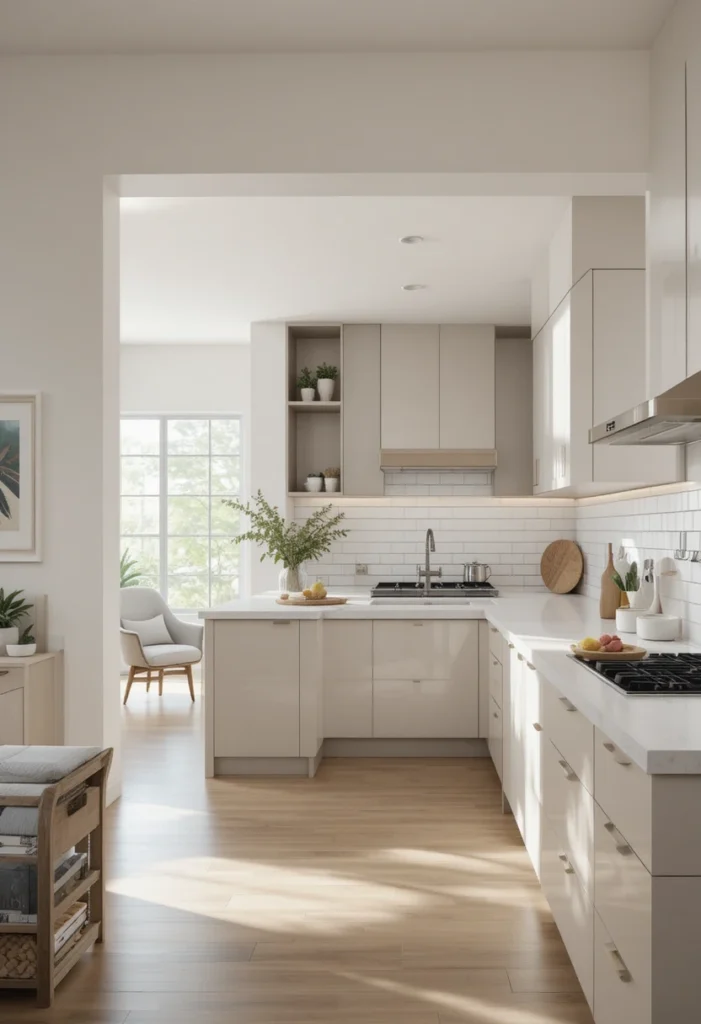
In an open layout, your kitchen backsplash is permanently on display from the living room. An overly busy, loud backsplash can visually dominate the entire space and make the living area feel secondary.
Choose something clean — white subway tile, soft grey stone, or large-format neutral tiles — that adds texture without demanding attention. Let your living room decor be the personality; let the backsplash simply support it quietly.
Tip: A matte finish backsplash reads softer and more cohesive from a distance than glossy tiles, which can reflect and fragment light.
Choose Streamlined Furniture
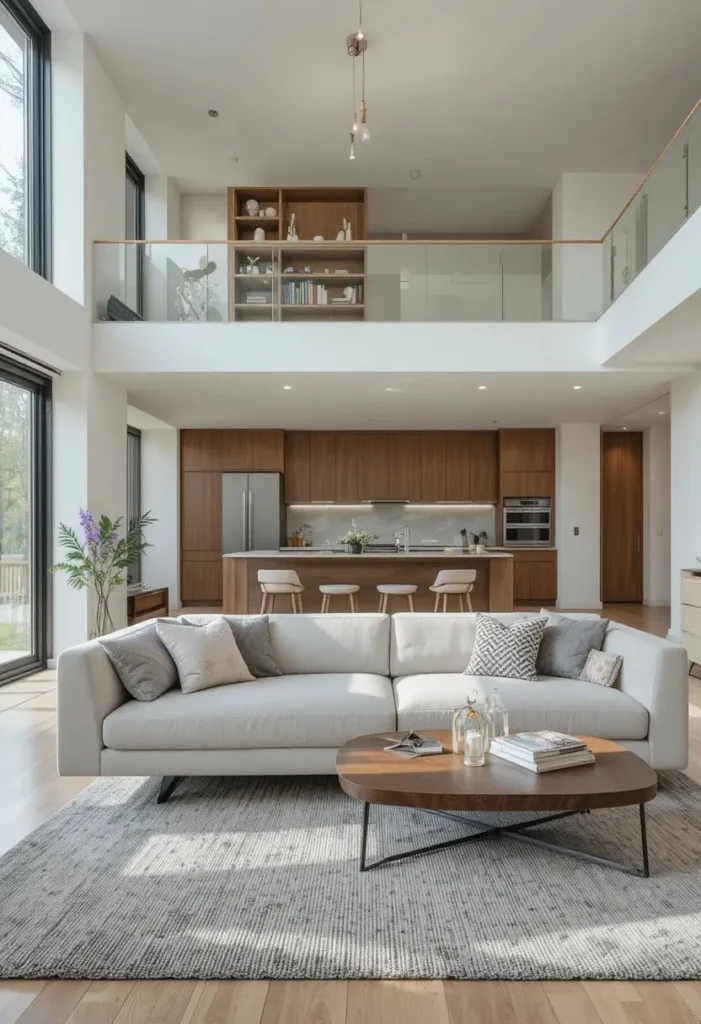
Bulky, oversized furniture fights an open layout rather than working with it. Low-profile sofas, slim-legged coffee tables, and furniture with clean lines keep the visual weight light and the space feeling open and breathable.
This matters especially in smaller open concept homes where every piece is always visible from multiple angles. Streamlined doesn’t mean cold — layer in soft cushions and warm throws to keep it inviting.
Tip: Furniture with visible legs creates an illusion of more floor space — a small but genuinely effective trick in open layouts.
Light Every Zone Separately
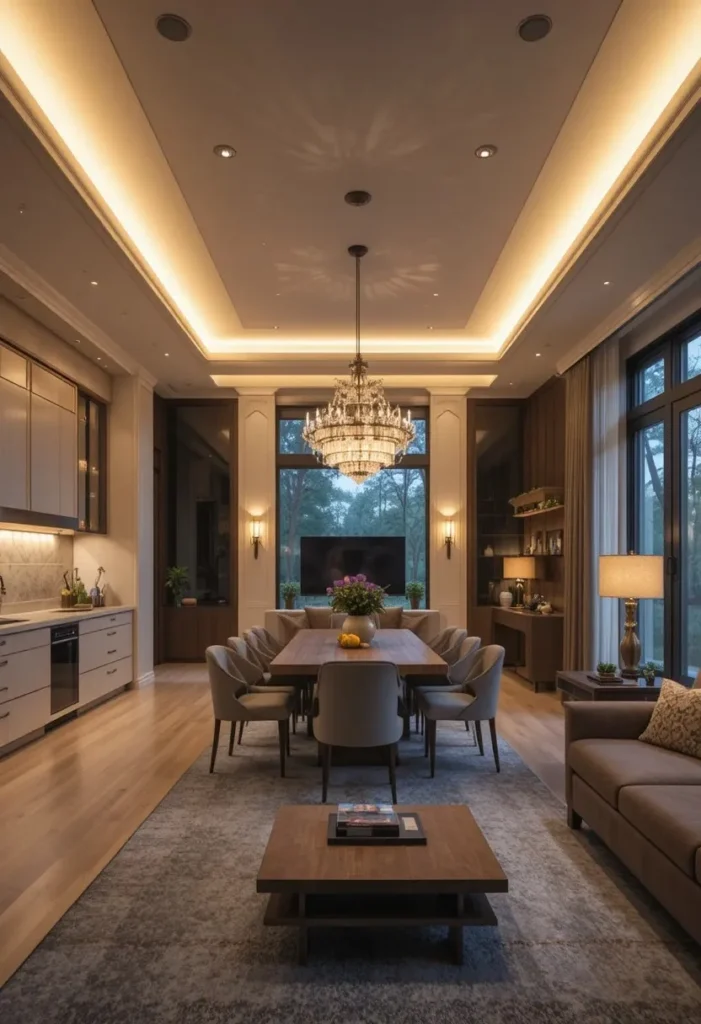
One of the biggest mistakes in open concept spaces is treating lighting as one single decision. Each zone — kitchen, dining, living — deserves its own light source and its own mood.
Recessed lights over the kitchen, a pendant above the dining table, and floor or table lamps in the living area give you complete control over the atmosphere. Bright and functional while cooking. Warm and dim while relaxing. All within the same open space.
Tip: Install dimmers on every circuit — they’re inexpensive and completely transform how a space feels from morning to evening.
Conclusion
Creating a beautiful living room kitchen open concept isn’t about knocking down every wall and starting over. It’s about making thoughtful choices — a continuous floor, a unifying color, the right lighting in the right places. Start with one idea from this list that excites you most. Try it. Live with it. Then build from there. Your home deserves to feel connected, generous, and completely yours. The best open concept spaces don’t just look beautiful — they make everyday life feel a little more like the life you actually want.