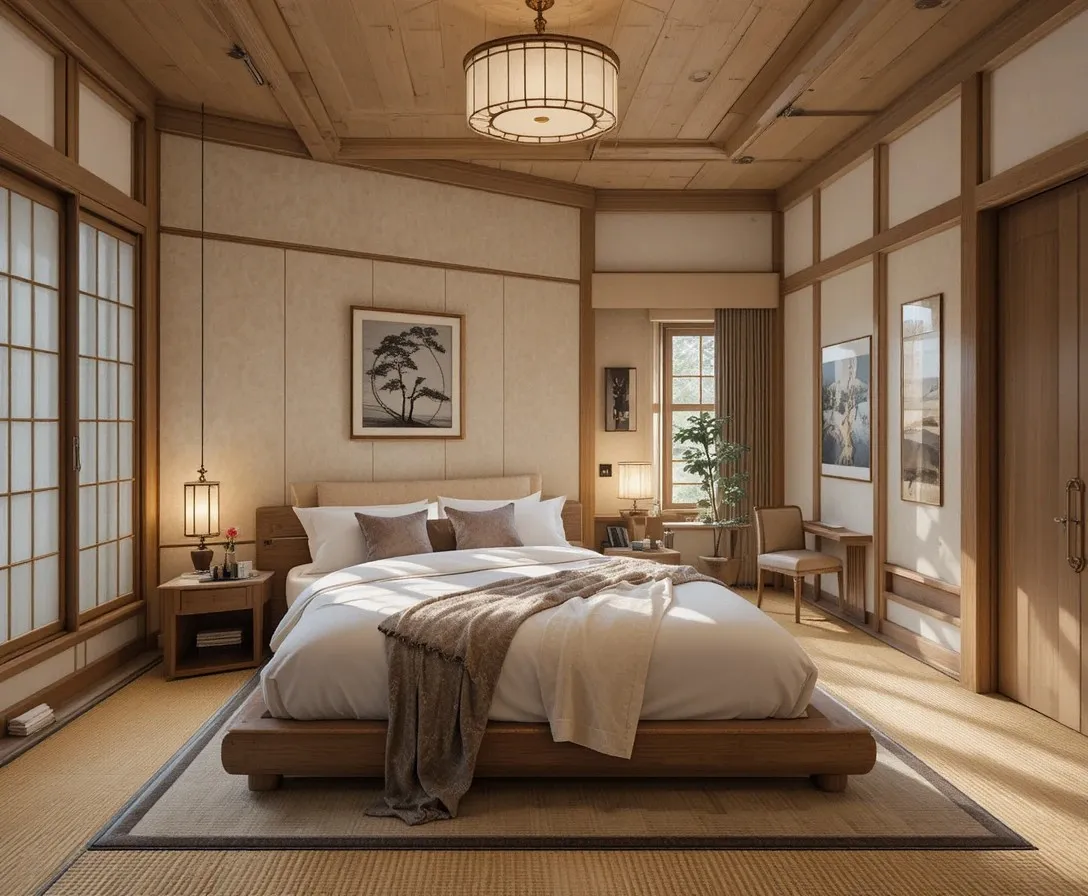
14 Japanese Bedroom Ideas That Bring Calm and Simplicity Home
Some bedrooms feel busy no matter how much you clean — cluttered surfaces, mismatched furniture, too much visual noise. If you’re longing for a space that feels quiet and unhurried instead, Japanese design offers a beautiful answer. These Japanese bedroom ideas focus on natural materials, gentle light, and thoughtful simplicity. Let’s create a room that helps you slow down, breathe deeper, and actually rest.
Low Platform Bed Frame
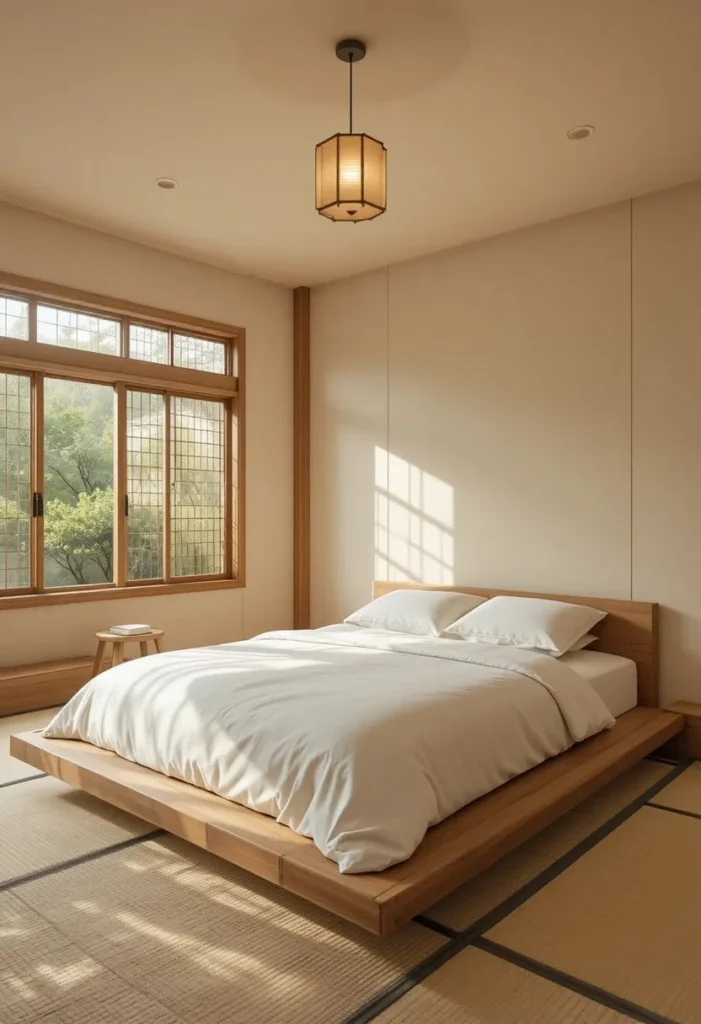
A low wooden platform bed sits close to the floor, creating a grounded, minimalist silhouette. Choose natural oak or walnut tones with clean, straight lines and no ornate detailing.
This works because lower furniture makes ceilings feel higher and rooms feel more spacious and calm.
Tip: Skip the box spring entirely — a slatted wood base keeps the look authentic and airy.
Shoji Screen Room Divider
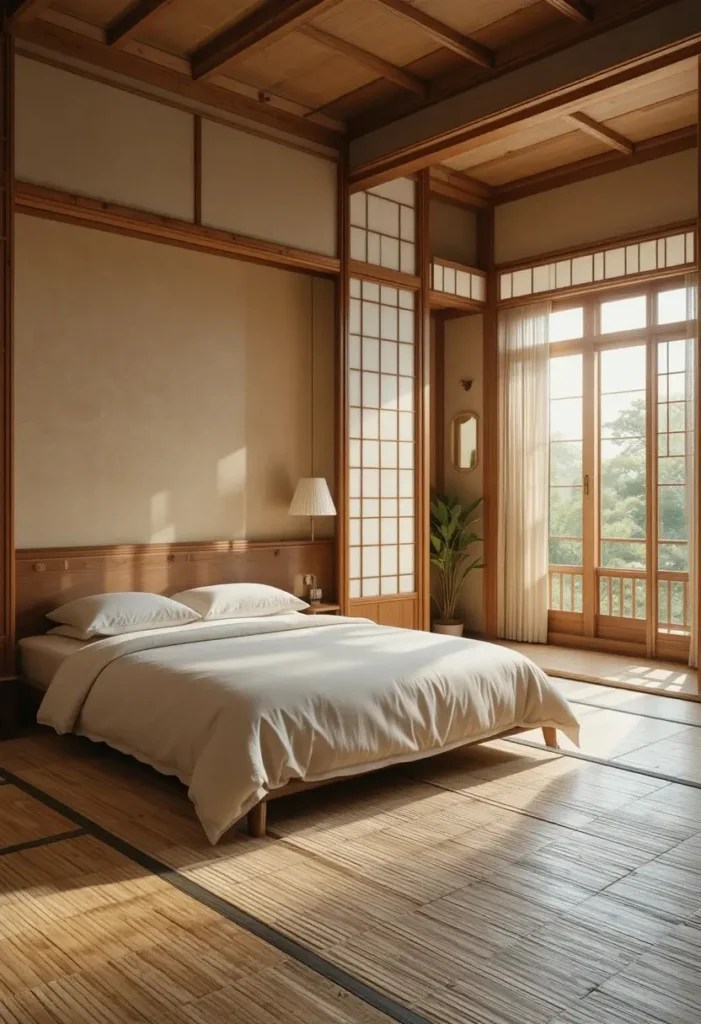
A traditional shoji screen with wood framing and translucent paper panels softly divides your space or covers a closet. Light filters through beautifully, creating soft, diffused shadows.
It works because it adds privacy and texture without blocking natural light or feeling heavy.
Tip: Use it as a closet door alternative for an easy, authentic touch.
Tatami Mat Flooring
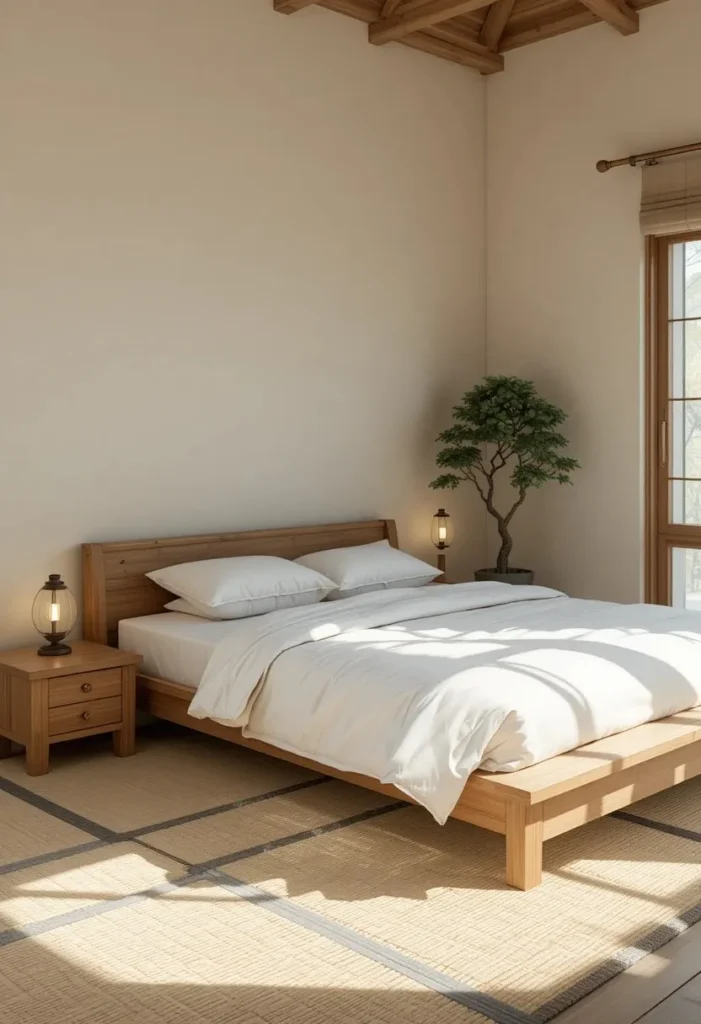
Natural woven tatami mats in warm straw tones bring texture and quiet elegance underfoot. Their subtle grid pattern adds gentle visual interest without color or clutter.
This works because tatami grounds the whole room in tradition while staying incredibly calming and neutral.
Tip: Place a small area rug of tatami near your bed if full flooring isn’t possible.
Neutral, Muted Color Palette
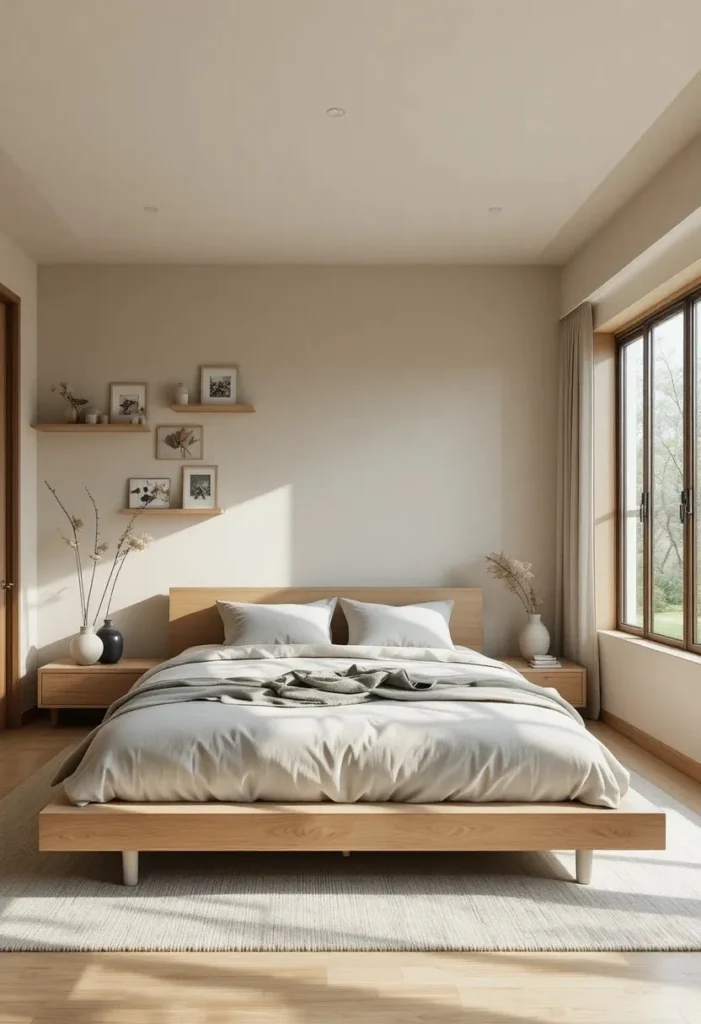
Stick to soft beige, warm gray, charcoal, and muted sage tones throughout walls, bedding, and decor. Avoid bright or saturated colors entirely.
It works because a restrained palette mimics the natural, understated beauty found in traditional Japanese interiors.
Tip: Add one small black accent (a vase or frame) to ground the palette and add subtle contrast.
Paper Lantern Lighting
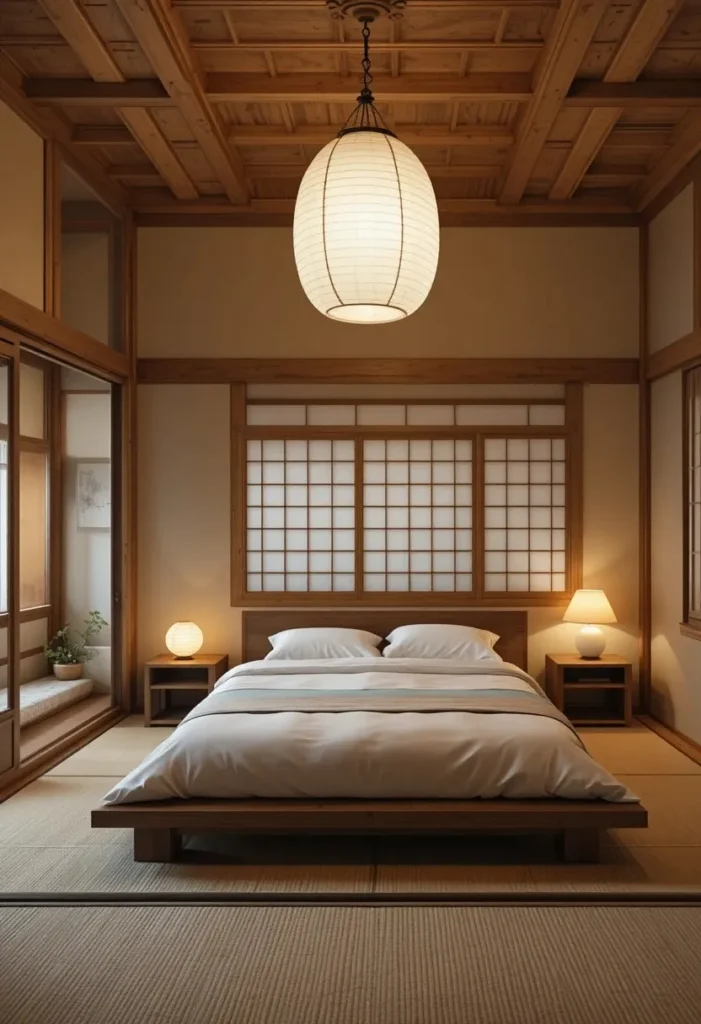
Soft, round paper lanterns in white or cream hang from the ceiling or sit on the floor, casting warm, gentle light. Their glow feels diffused rather than harsh or direct.
This works because soft ambient lighting supports the calm, meditative mood central to Japanese design.
Tip: Choose warm LED bulbs to avoid overheating delicate paper shades.
Built-In Wood Storage
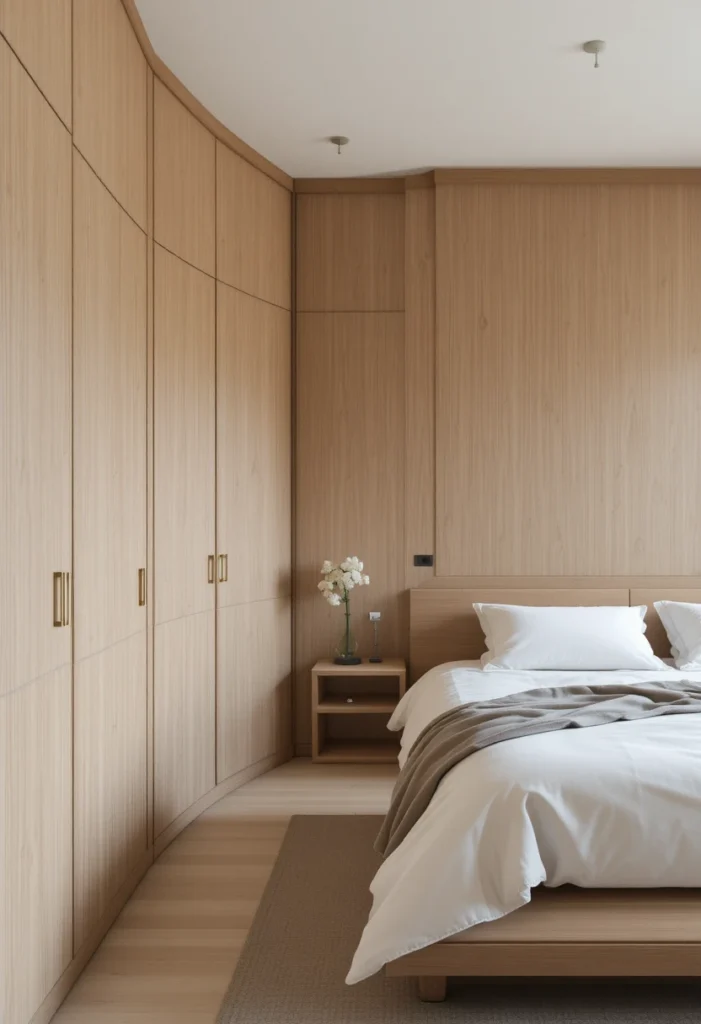
Sleek wooden cabinets built into the wall keep everything hidden and out of sight. Smooth, handle-free doors in natural wood tones maintain clean lines.
It works because minimal visible storage is key to achieving that clutter-free, serene Japanese bedroom feel.
Tip: Use push-to-open hardware to keep the surface completely seamless.
See More Ideas: 12 Blue Accent Wall Bedroom Ideas That Feel Like a Retreat
Bonsai or Small Potted Greenery
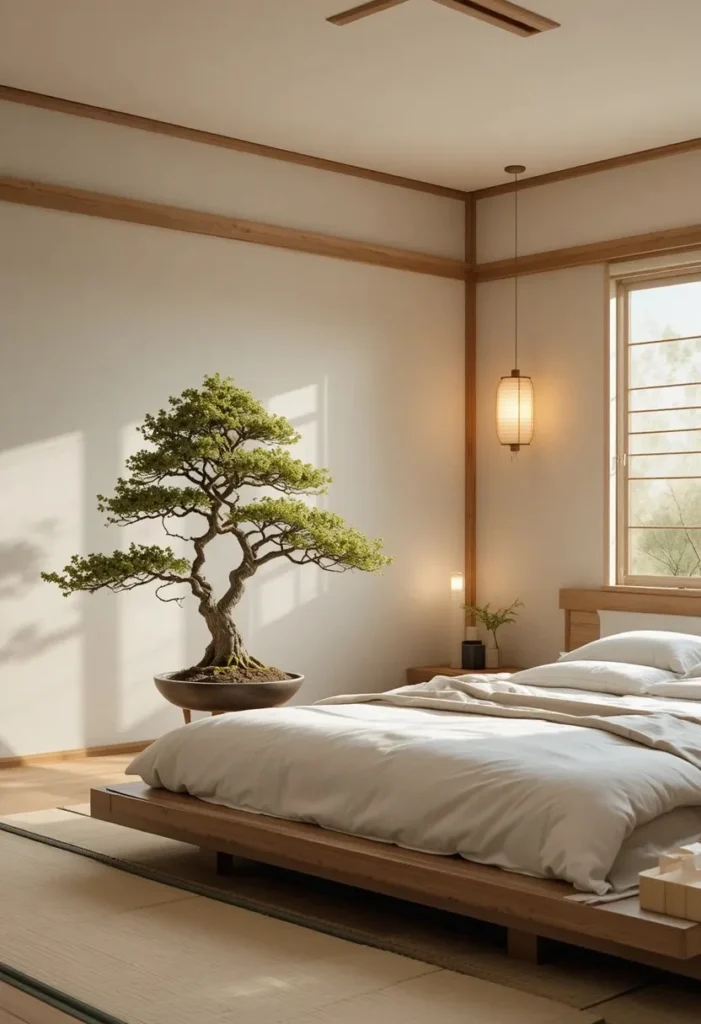
A single small bonsai tree or potted plant on a low wooden stand adds a touch of nature without overwhelming the space. Keep the pot simple — unglazed clay or matte ceramic.
This works because one intentional plant feels more peaceful than a cluttered plant collection.
Tip: Place it near a window so it gets natural light without needing to be moved often.
Rice Paper Wall Art
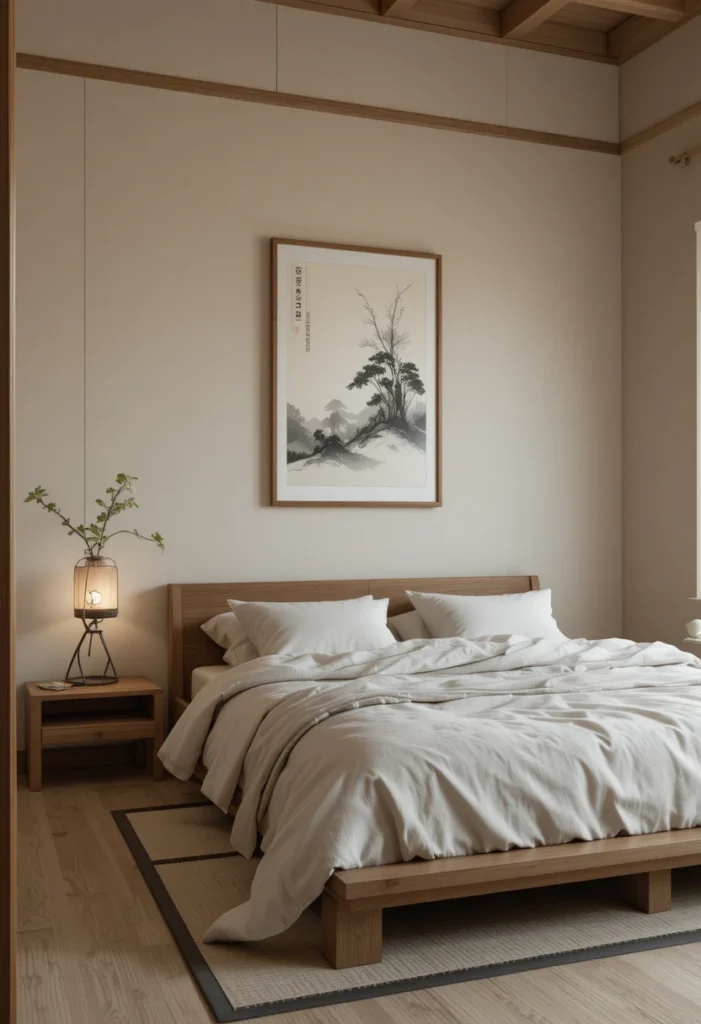
A single framed piece of rice paper art, featuring simple calligraphy or an ink-brush landscape, brings quiet elegance to a bare wall. Keep the frame thin and understated.
It works because minimal wall decor supports the uncluttered, mindful energy of Japanese bedroom ideas.
Tip: Hang art at eye level when seated on the low bed, not standard wall height.
Floor Cushions or Zabuton Seating
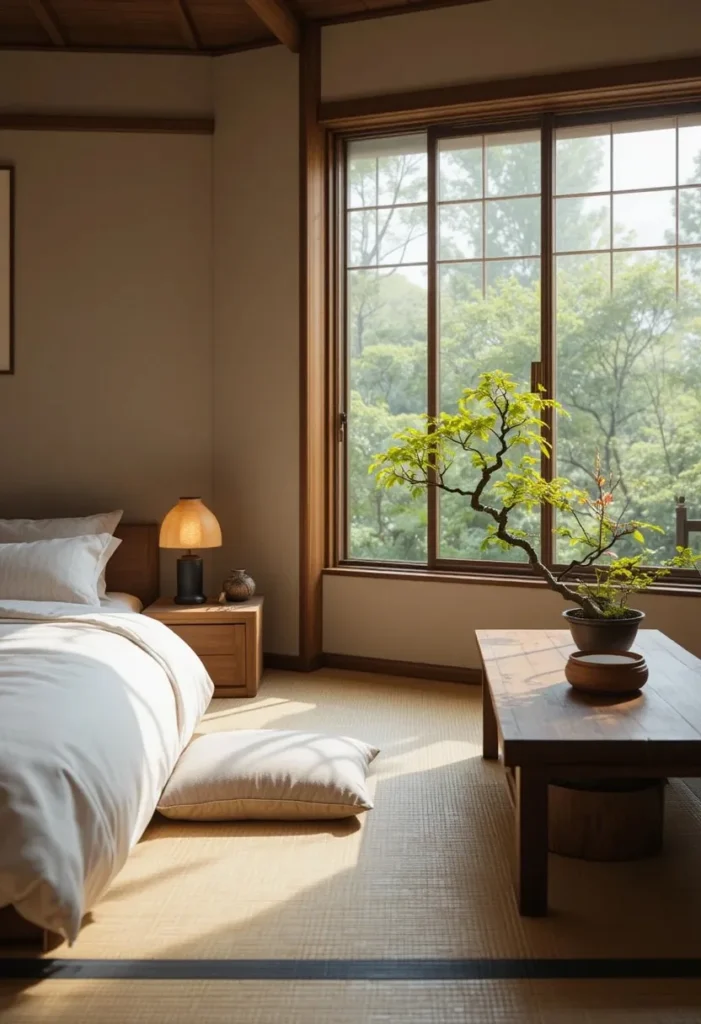
A low floor cushion (zabuton) in natural linen or cotton creates a simple seating nook near a window. Choose muted tones like oatmeal, charcoal, or soft indigo.
This works because floor seating keeps the room feeling open and grounded, staying true to minimalist Japanese living.
Tip: Pair it with a small low table for tea or reading.
Natural Linen Bedding
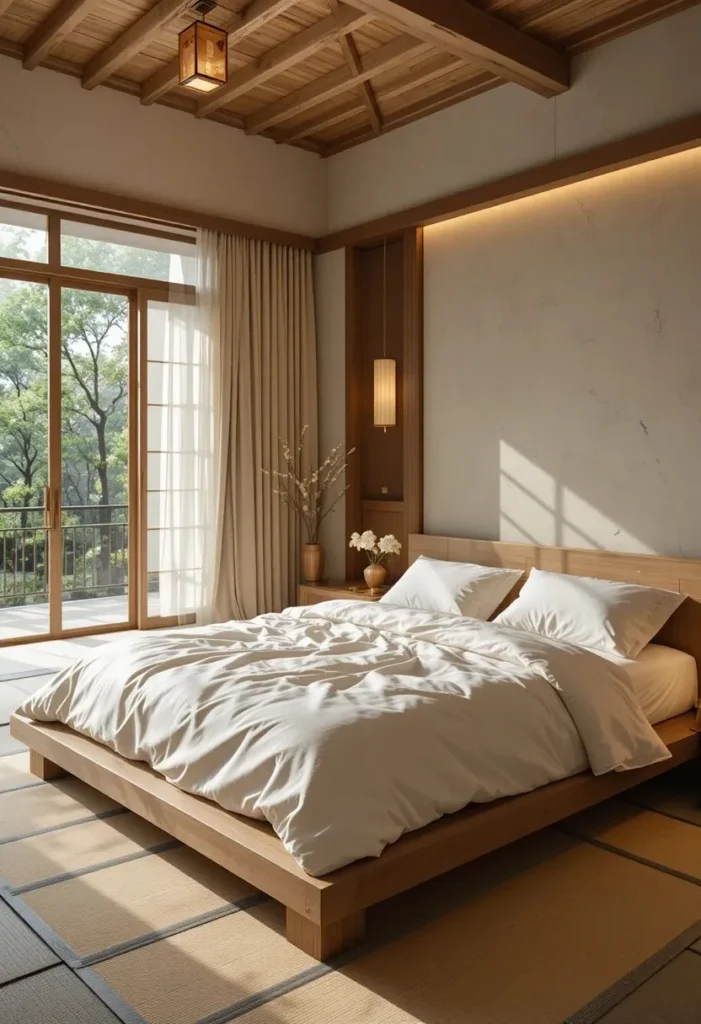
Soft, slightly wrinkled linen sheets in warm white or soft gray bring effortless texture to the bed. Avoid crisp, overly stiff fabrics.
It works because linen’s natural texture feels lived-in and calm, matching the relaxed elegance of Japanese interiors.
Tip: Wash linen before use to soften it and enhance that relaxed, textured look.
See More Ideas: 14 Rainbow Bedroom Ideas That Bring Color and Joy Into Your Space
Sliding Wood Closet Doors
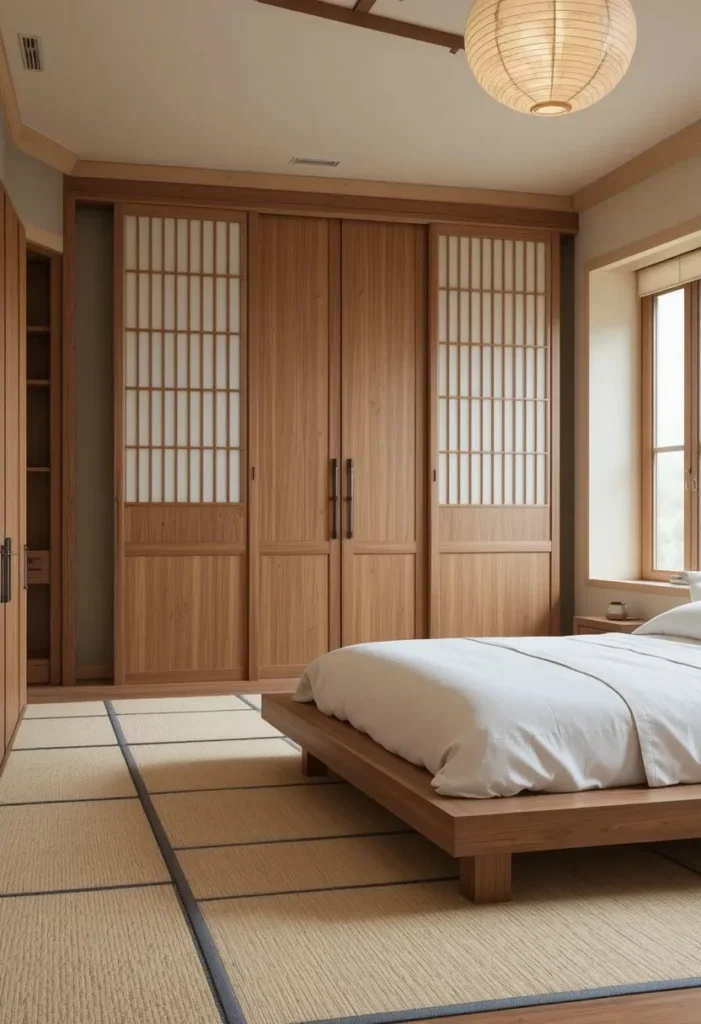
Replace bulky closet doors with sliding wood panels featuring simple grid detailing. Keep the wood tone matching your bed frame for consistency.
This works because sliding doors save space and add clean, architectural interest without clutter.
Tip: Choose matte wood finishes over glossy for a more authentic, natural feel.
Ikebana Flower Arrangement
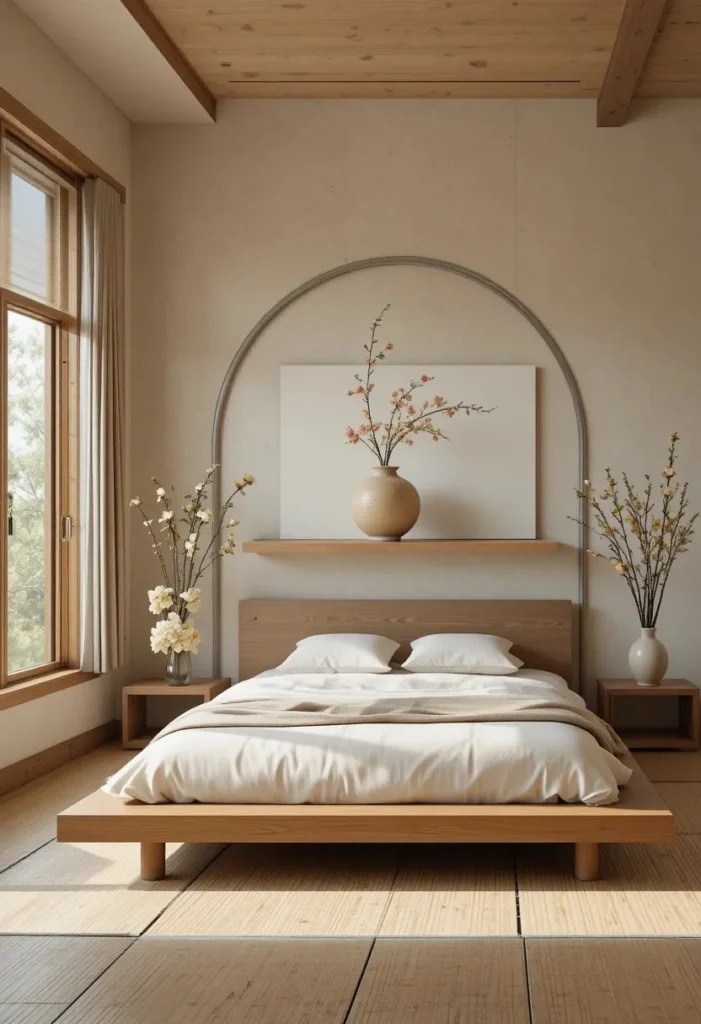
A single, minimal flower arrangement — just one or two stems — sits in a simple ceramic vase on a low shelf. Less is intentionally more here.
It works because ikebana’s philosophy of simplicity mirrors the overall calm, uncluttered mood of the room.
Tip: Choose a vase with an interesting shape since the arrangement itself stays minimal.
Wooden Slat Ceiling Detail
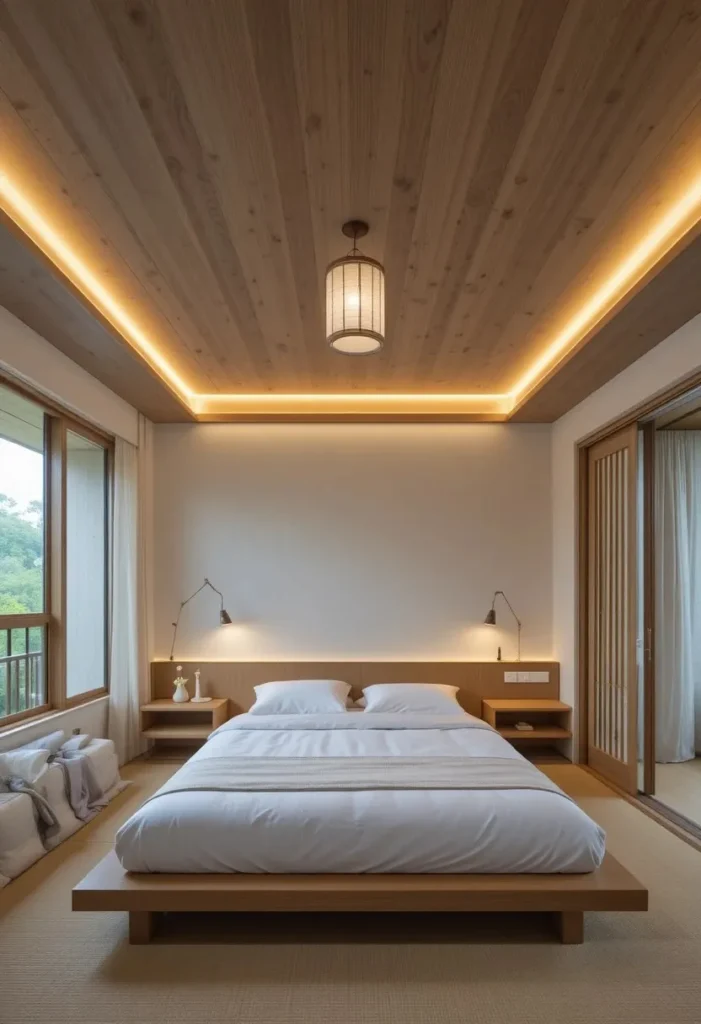
Thin wood slats installed across the ceiling add subtle texture and warmth overhead. Keep the wood tone light to maintain an airy, open feeling.
This works because it introduces natural material even in an often-overlooked space, adding quiet richness.
Tip: Add hidden LED strip lighting behind slats for soft, indirect glow at night.
Zen Garden Nightstand Decor
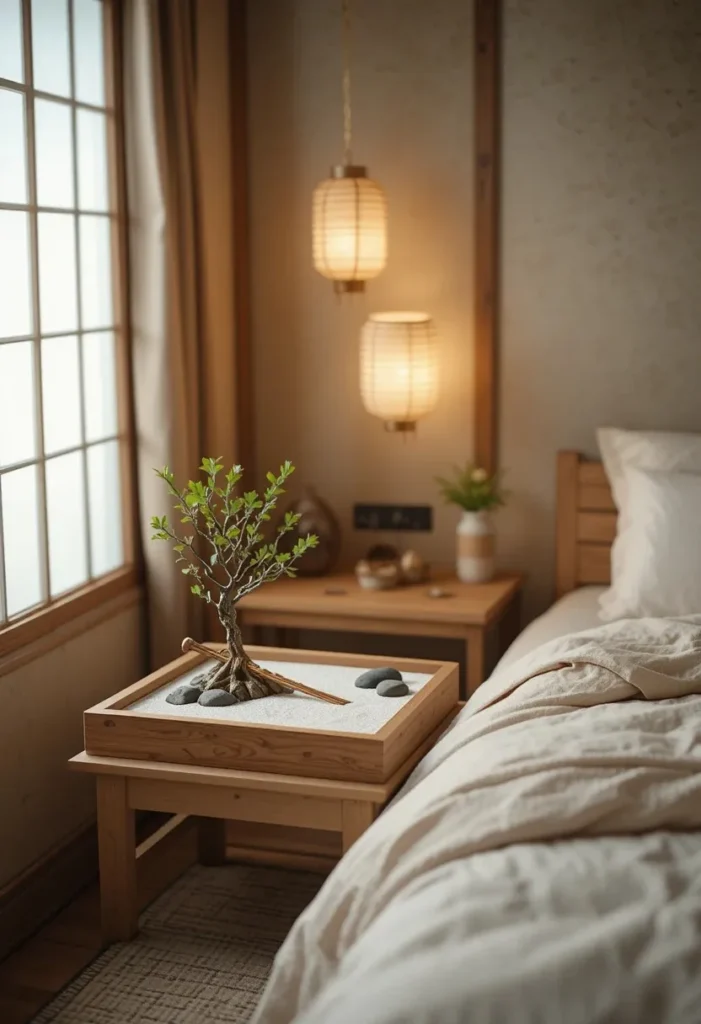
A tiny tabletop zen garden with sand and a small rake sits on your nightstand as a mindful, tactile decor piece. It’s both functional art and a calming ritual.
It works because it invites small, mindful moments right before bed — a quiet act of care and presence.
Tip: Keep the sand light gray or white for a serene, understated look.
Final Thoughts
A calm bedroom isn’t about having less for the sake of it — it’s about choosing only what truly matters. These Japanese bedroom ideas show that simplicity, natural materials, and gentle light can transform a room into a sanctuary.
Start small: swap your bedding, add one plant, dim your lighting. Slowly, your space will become the quiet retreat you’ve been craving all along.