14 Stunning Mid Century Modern Dining Room Ideas That Never Go Out of Style
Some design styles fade. Mid century modern? It just keeps getting better. There’s something about those clean lines, warm wood tones, and perfectly placed retro details that makes a dining room feel both timeless and deeply inviting. Whether you’re starting from scratch or refreshing what you already have, a mid century modern dining room doesn’t need a big budget — just the right ideas. These 14 ideas will help you create a space that’s stylish, warm, and genuinely yours.
Walnut Dining Table — The Anchor Piece
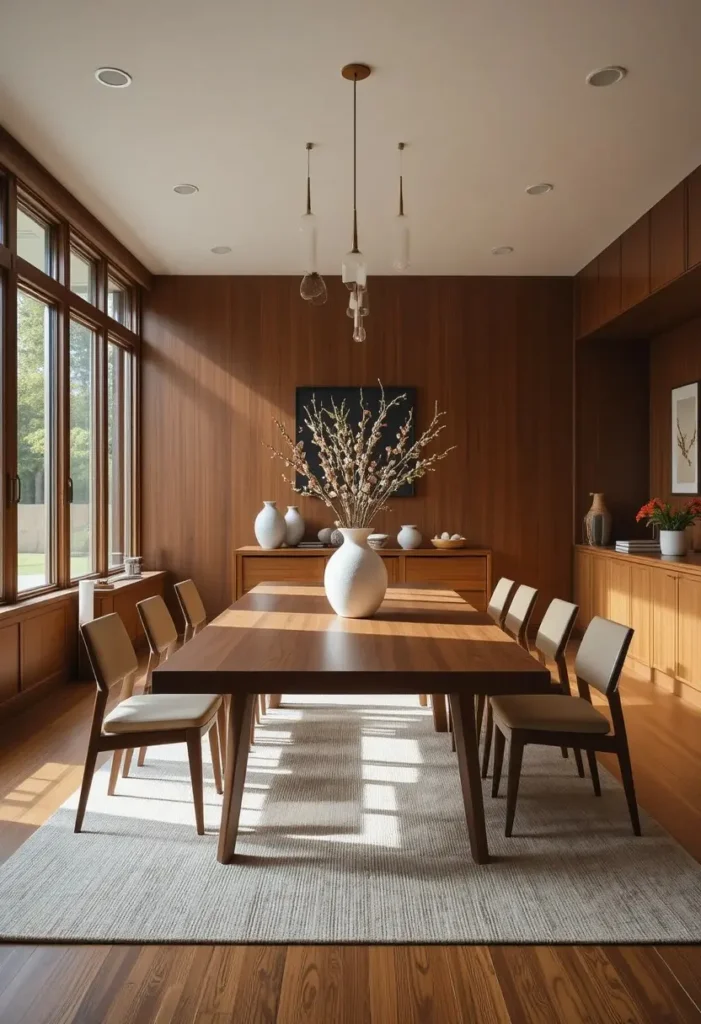
Every great mid century dining room starts with one hero piece — and a walnut table is it. A solid walnut or walnut-veneer dining table with tapered legs in a warm honey or dark chocolate tone instantly sets the whole mood. The natural wood grain adds organic texture that no painted surface can replicate. Keep the top uncluttered — a single ceramic vase or a low candle arrangement is all it needs. The table does the talking.
It works because walnut’s rich warmth is the defining material of mid century design — everything else in the room responds to it.
Practical tip: Use coasters religiously on walnut — it marks easily, and water rings are heartbreaking on a beautiful table.
Tapered Leg Chairs in Bold Upholstery
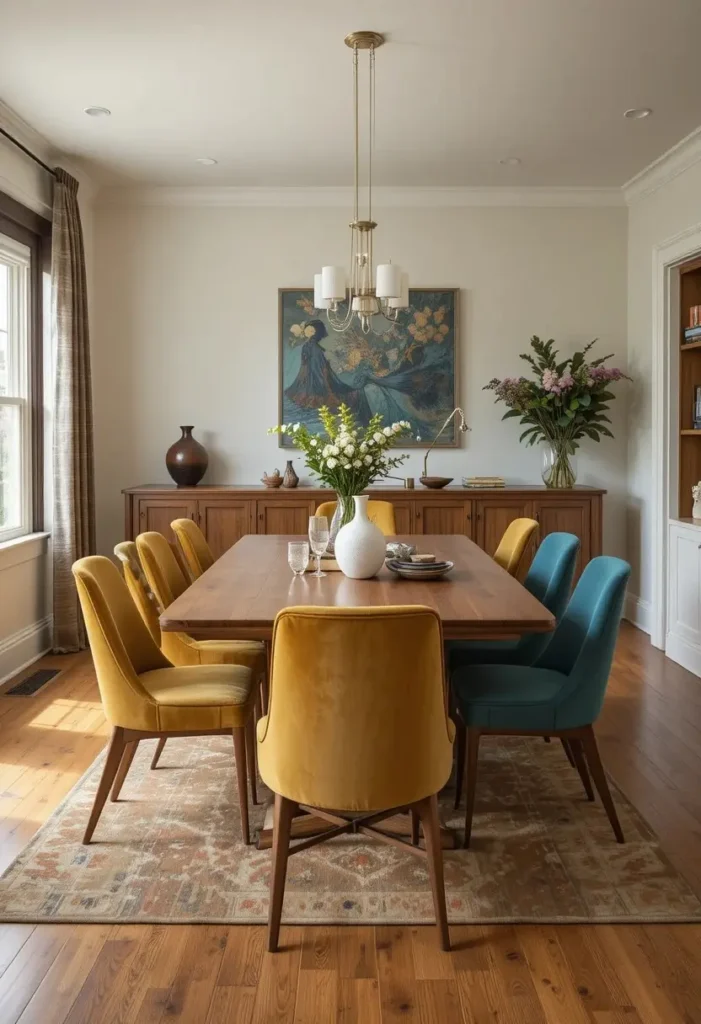
The chairs are where mid century dining rooms get their personality. Choose dining chairs with slim tapered wooden legs — oak, walnut, or beech — and upholster the seats in a bold fabric. Think mustard velvet, burnt orange boucle, or deep teal. The contrast between the structured silhouette and the rich fabric colour is pure mid century magic. Mix two complementary colours around the table for an even more considered look.
It works because tapered legs are the visual signature of the era — they lift the furniture visually and keep the room feeling light.
Practical tip: Choose performance fabric for dining chair seats — beautiful upholstery that survives real meals is always worth the upgrade.
Sputnik Chandelier Overhead
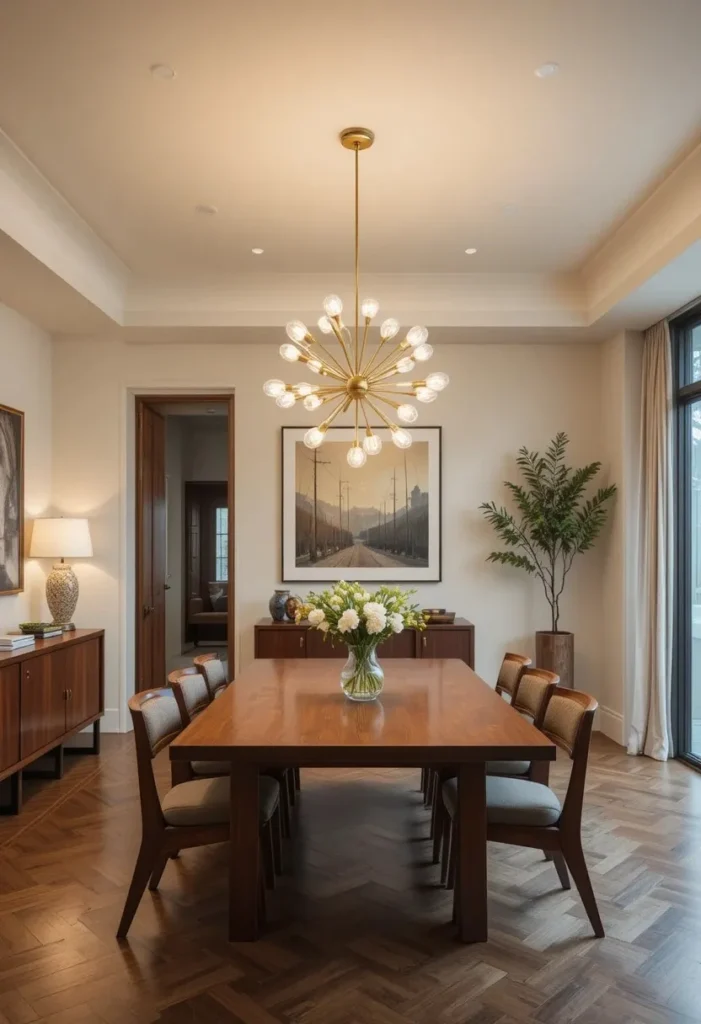
Nothing signals mid century modern faster than a Sputnik chandelier above the dining table. This starburst light fixture — with arms radiating outward holding small bulbs — adds instant drama and era-appropriate character. Choose brass or brushed gold for warmth, or matte black for a more graphic, contemporary take. Hang it low over the table so it creates an intimate pool of warm light during dinner. It becomes the room’s jewellery.
It works because the Sputnik’s sculptural form adds visual height and a strong focal point without requiring any architectural changes.
Practical tip: Use warm Edison or amber bulbs — cool white light completely kills the warm, intimate mood mid century dining rooms depend on.
Warm Terracotta or Mustard Walls
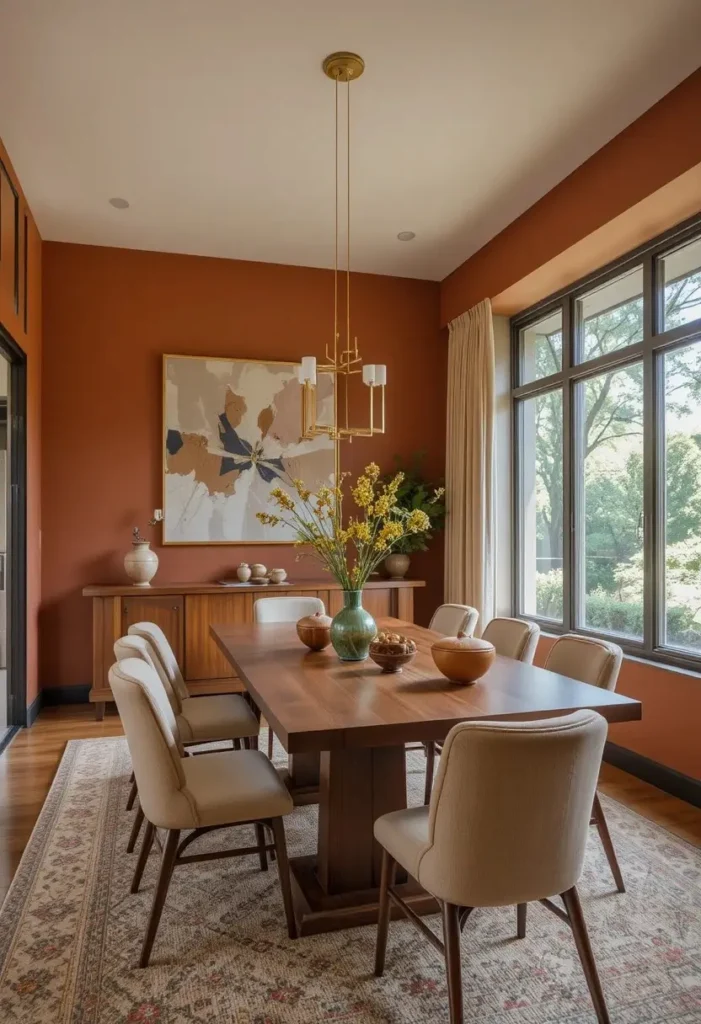
Forget grey and greige — mid century dining rooms thrive on warm, earthy colour. Paint your dining room walls in terracotta, warm mustard, olive green, or burnt sienna. These colours were everywhere in the 1950s and 60s and they work just as beautifully today. Against walnut furniture and brass fixtures, a terracotta wall feels rich, grounded, and completely alive. The room glows in candlelight and feels deeply welcoming at dinner time.
It works because warm wall colours amplify the natural wood tones in mid century furniture, creating a cohesive, immersive atmosphere.
Practical tip: Test your paint in the actual room at different times of day — terracotta shifts dramatically between morning and evening light.
Credenza Against the Wall
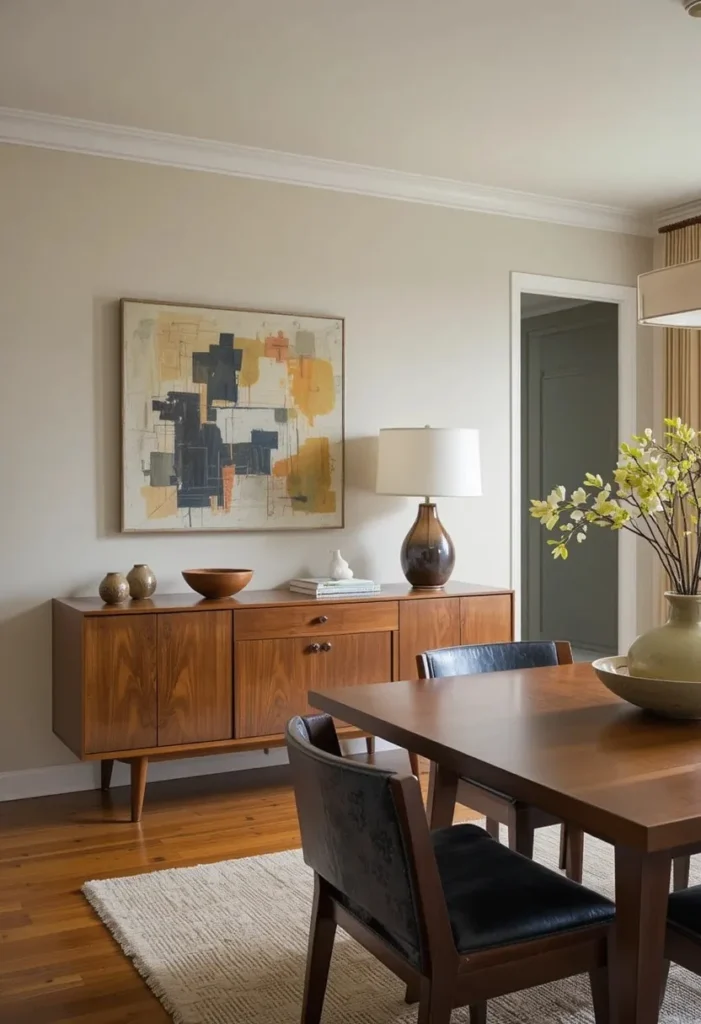
A mid century credenza is equal parts storage and style statement. A low, long sideboard in walnut or teak with slim legs and sliding or tambour doors is the perfect dining room companion piece. Use it to store tableware, linens, and candles inside — then style the top with a table lamp, a ceramic bowl, and a piece of abstract art leaned against the wall above. Functional and beautiful simultaneously.
It works because the credenza’s horizontal low profile balances the vertical lines of chairs and walls, grounding the entire room visually.
Practical tip: Style the credenza top in odd numbers — three objects always looks more intentional than two or four.
See More Ideas: 16 Colorful Dining Room Ideas That Make Every Meal Feel Like a Celebration
Abstract Art on the Dining Room Wall
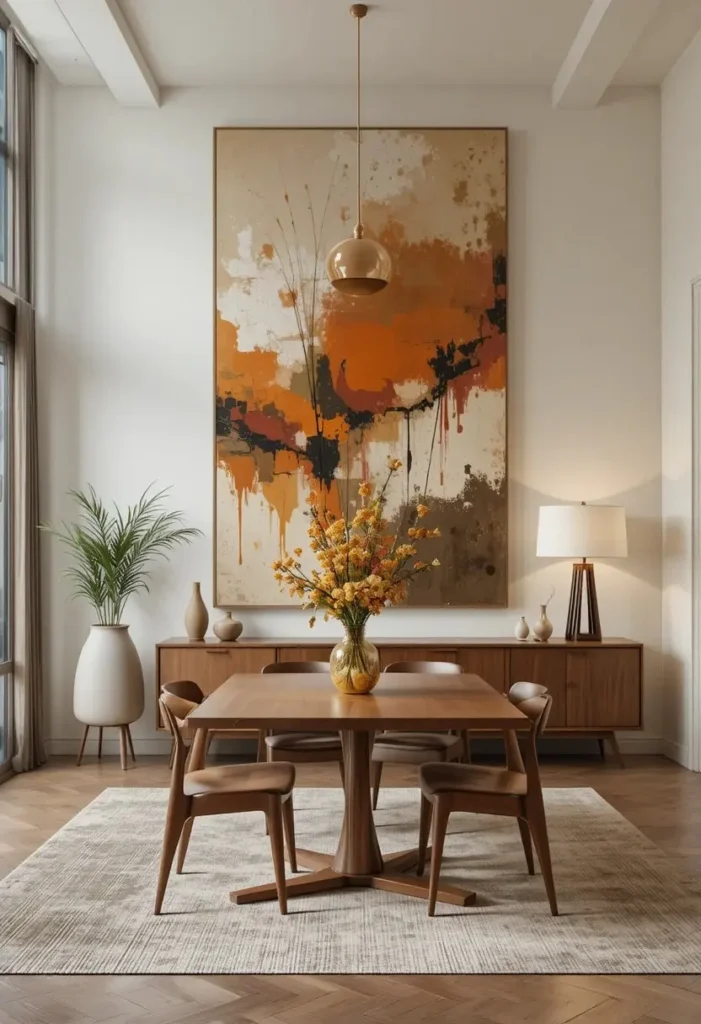
Mid century modern and bold abstract art were made for each other. Choose a large canvas or print in warm tones — ochre, rust, olive, cream — with loose gestural brushwork or geometric shapes. Hang it at eye level on your main dining wall. The art adds colour, movement, and personality without competing with your furniture. It tells guests something about who you are before you’ve even sat down to eat.
It works because abstract art echoes the era’s embrace of creative expression and adds the one element that makes a room feel truly lived-in.
Practical tip: Go bigger than feels comfortable — art that’s too small on a large wall looks timid and makes the room feel unfinished.
Sculptural Ceramic Centrepiece
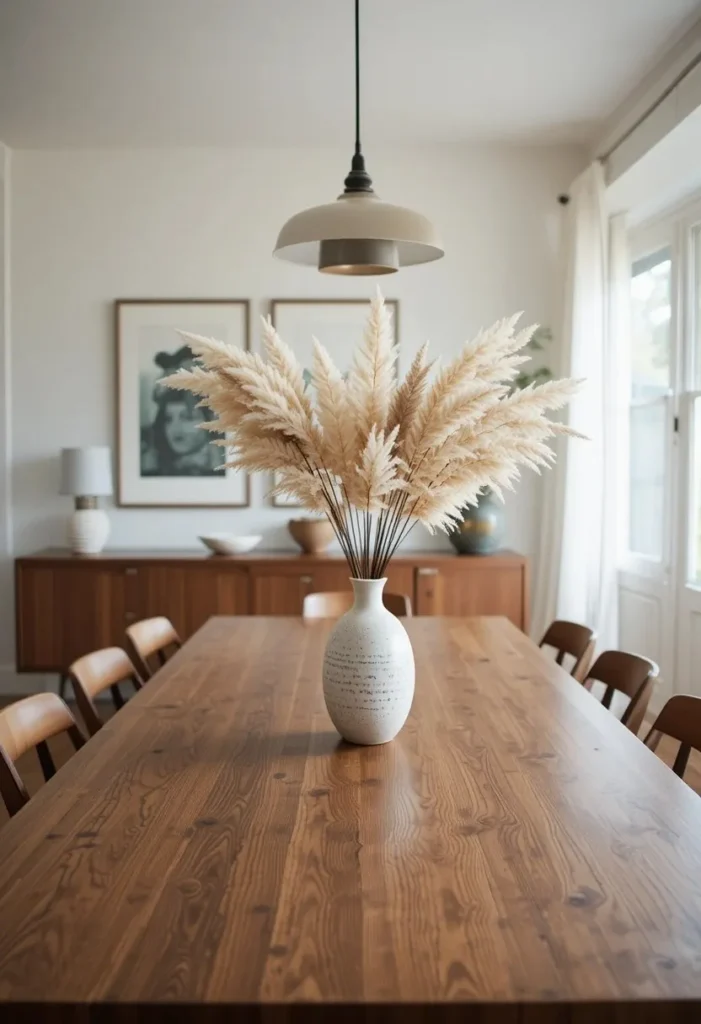
Details matter — and nothing finishes a mid century dining table like the right centrepiece. A chunky, hand-thrown ceramic bowl or vase in earthy tones — warm white, ochre, or matte terracotta — placed at the centre of your walnut dining table feels completely at home in a mid century space. Fill it with dried pampas, a few seasonal stems, or simply leave it beautifully empty. The imperfect texture of handmade ceramics adds organic warmth.
It works because mid century design always balanced clean geometric lines with organic, human-made textures — ceramics do exactly that.
Practical tip: Shop secondhand markets for vintage ceramics — authentic mid century pieces are often more affordable than new reproductions and far more characterful.
Geometric Patterned Rug
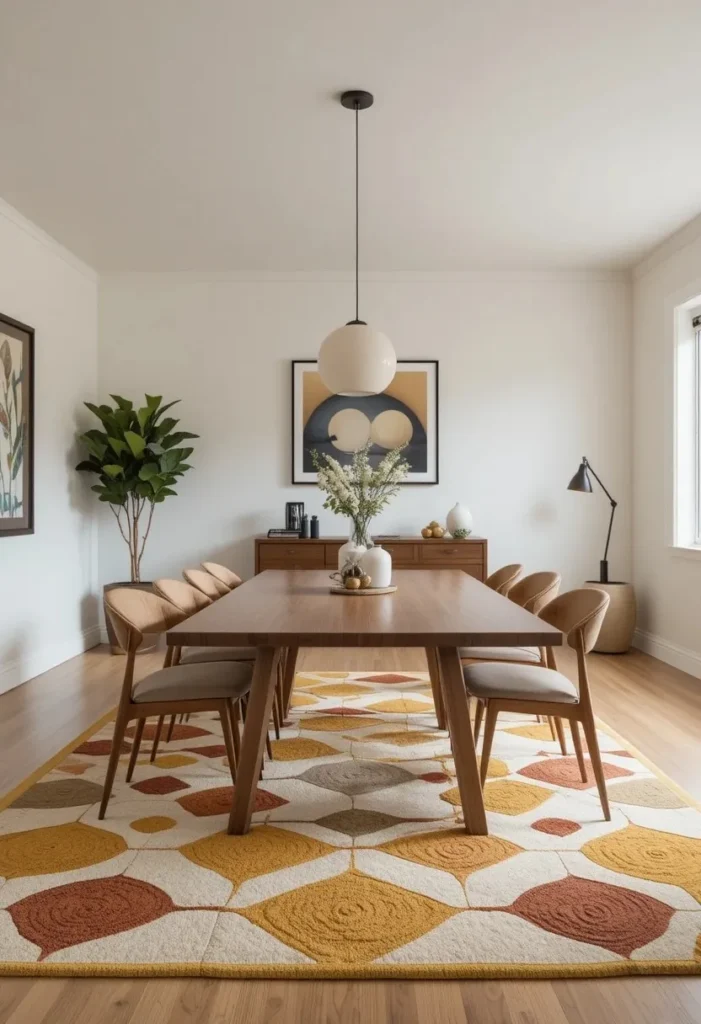
The right rug ties every element in your dining room together instantly. Choose a low-pile rug in a bold geometric pattern — diamonds, hexagons, or abstract shapes in warm mustard, rust, cream, and olive. It grounds the dining table and chairs into one defined zone, especially important in open-plan spaces. The pattern adds visual energy at floor level without cluttering walls or surfaces.
It works because a geometric rug speaks directly to mid century design’s love of shape and pattern without feeling overdone.
Practical tip: Size up always — your rug should extend at least 60cm beyond each side of the table so chair legs stay on it when pulled out.
Cane or Rattan Accent Chair
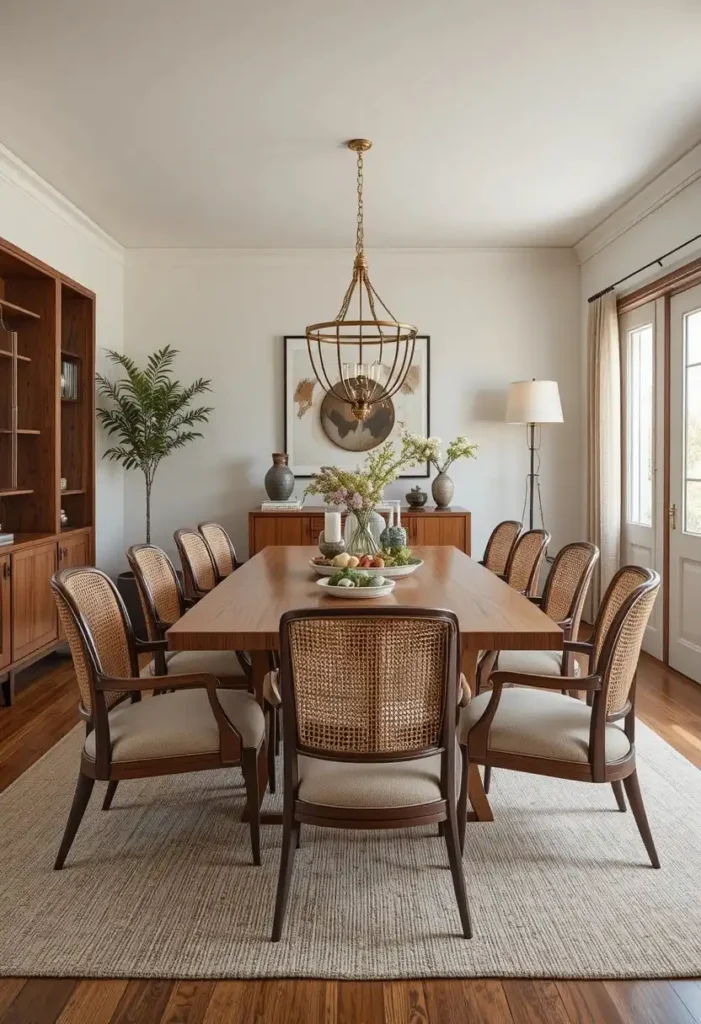
Add one cane chair to your dining set and the whole room gains texture and depth. Swap one or two of your upholstered dining chairs for cane-back or rattan-seat versions in natural or stained wood frames. The woven texture breaks up the solidity of upholstered seating beautifully. It adds a relaxed, organic layer that keeps the room from feeling too rigid or overly formal.
It works because mixing materials is fundamental to mid century design — no great room relies on just one texture or finish throughout.
Practical tip: Place cane chairs at the ends of a rectangular table — they frame the space beautifully and highlight the table’s length.
Warm Timber Panelling on One Wall
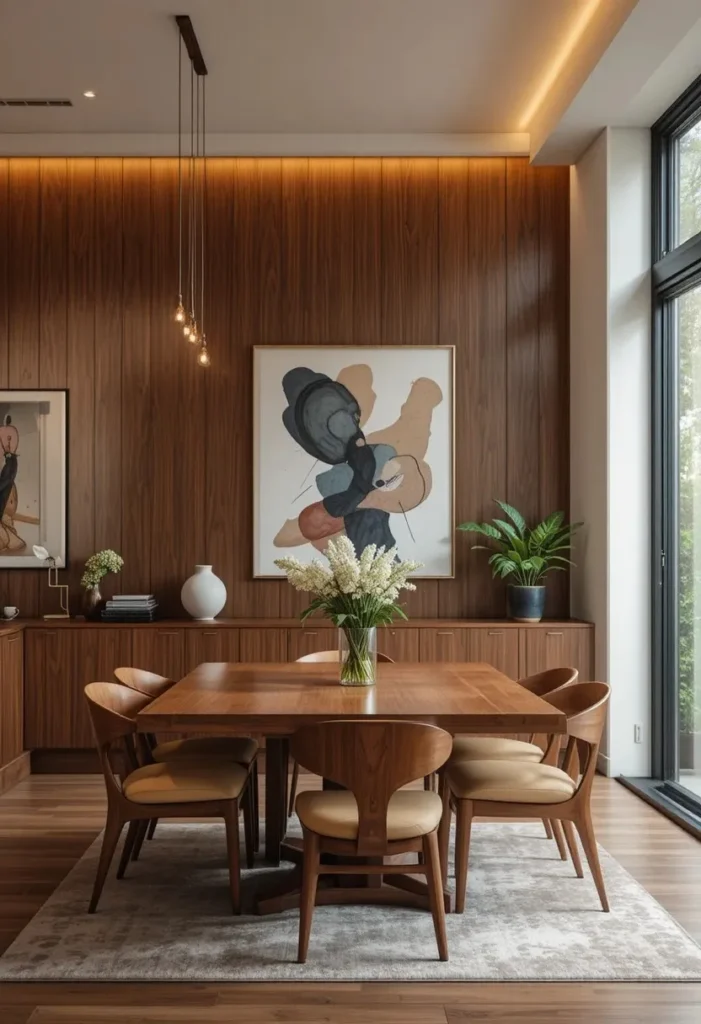
One panelled wall transforms an ordinary dining room into something genuinely special. Vertical or horizontal timber slat panelling on your main dining wall — in warm oak, walnut stain, or painted sage green — adds architectural depth and warmth that paint alone can’t achieve. It creates a natural backdrop that makes your furniture, art, and lighting pop dramatically. It’s a weekend DIY project with a genuinely professional result.
It works because the texture and warmth of timber panelling is the perfect backdrop for mid century furniture’s clean lines and natural materials.
Practical tip: Paint panelling in a deep tone like forest green or charcoal for a more dramatic, contemporary mid century look.
See More Ideas: 14 Green Dining Room Ideas That Will Transform How You Feel at the Table
Pendant Lights in Warm Amber Glass
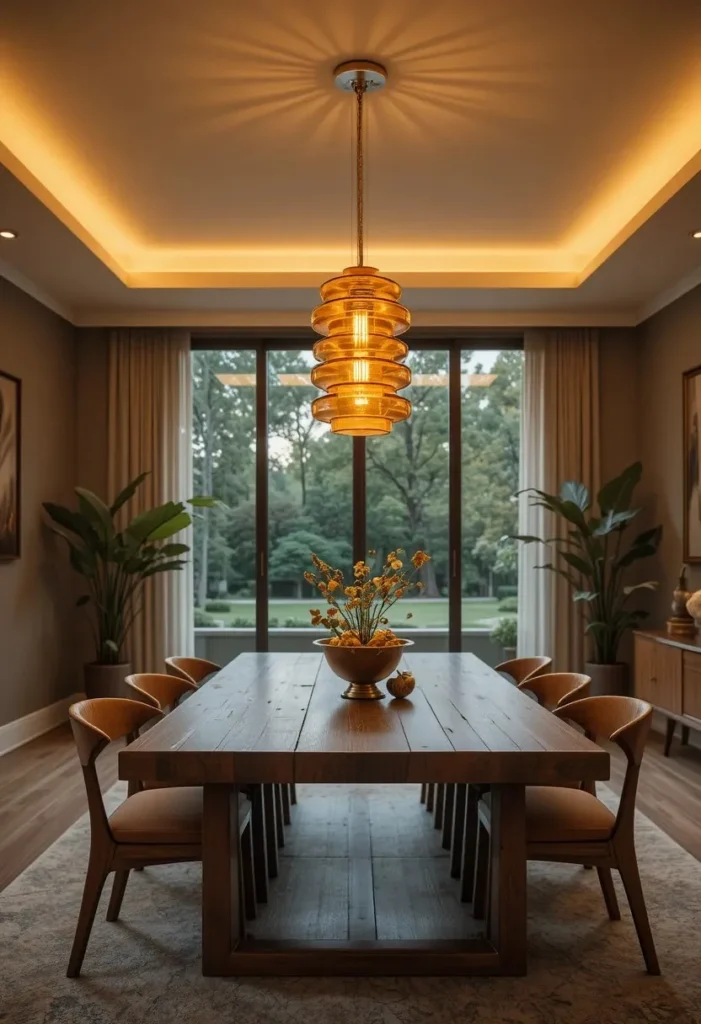
Amber glass pendant lights over your dining table create instant warmth and atmosphere. Hang two or three amber or smoked glass globe pendants at varying heights above the table. The warm glow they cast at dinner time is genuinely beautiful — everything looks better, everyone looks better. Choose brass fittings to stay true to the mid century palette. This one change alone can transform how your dining room feels after dark.
It works because warm amber glass filters light into a rich golden tone that complements walnut wood and earthy wall colours perfectly.
Practical tip: Put your dining room lights on a dimmer — the ability to lower the light level at dinner is worth every penny.
Floating Shelves With Curated Display
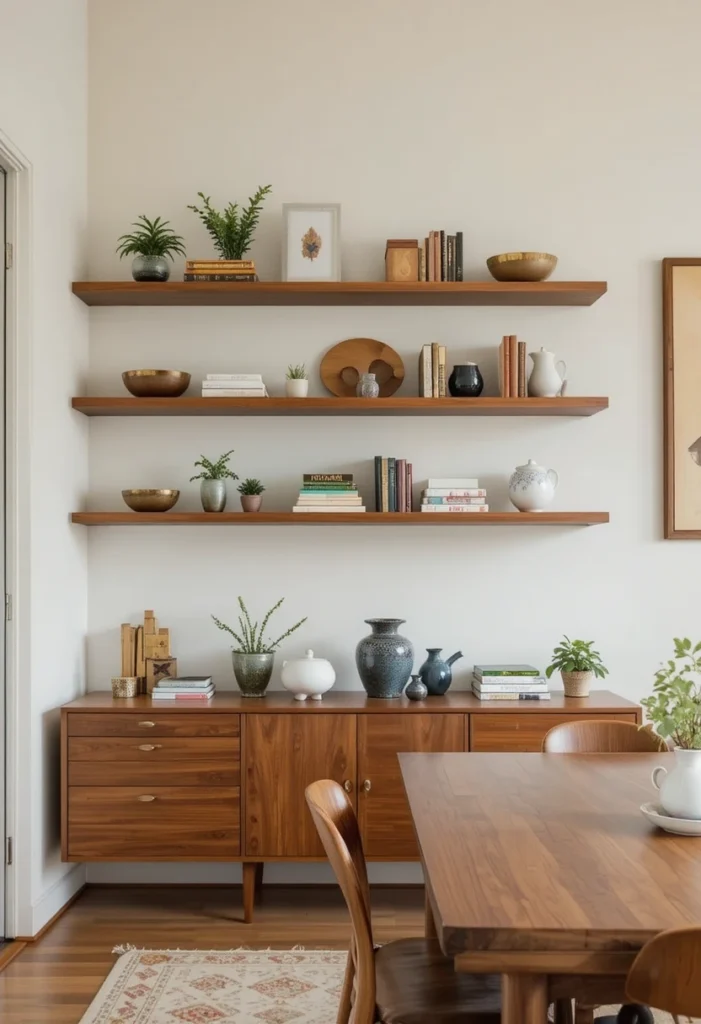
Replace a bulky cabinet with slim floating shelves and curate them like a gallery. Install two or three floating shelves in warm oak or walnut finish on your dining room wall. Style them with a mix of vintage ceramics, small plants, hardback books, and one or two brass objects. Keep breathing room between items — overcrowding kills the effect. The display adds personality and warmth without taking up any floor space.
It works because open shelving in a dining room bridges storage and decoration, keeping the room feeling light and personal simultaneously.
Practical tip: Edit your shelf display every season — fresh arrangements keep the room feeling alive and stop it looking like a permanent installation.
Brass Hardware and Fixtures Throughout
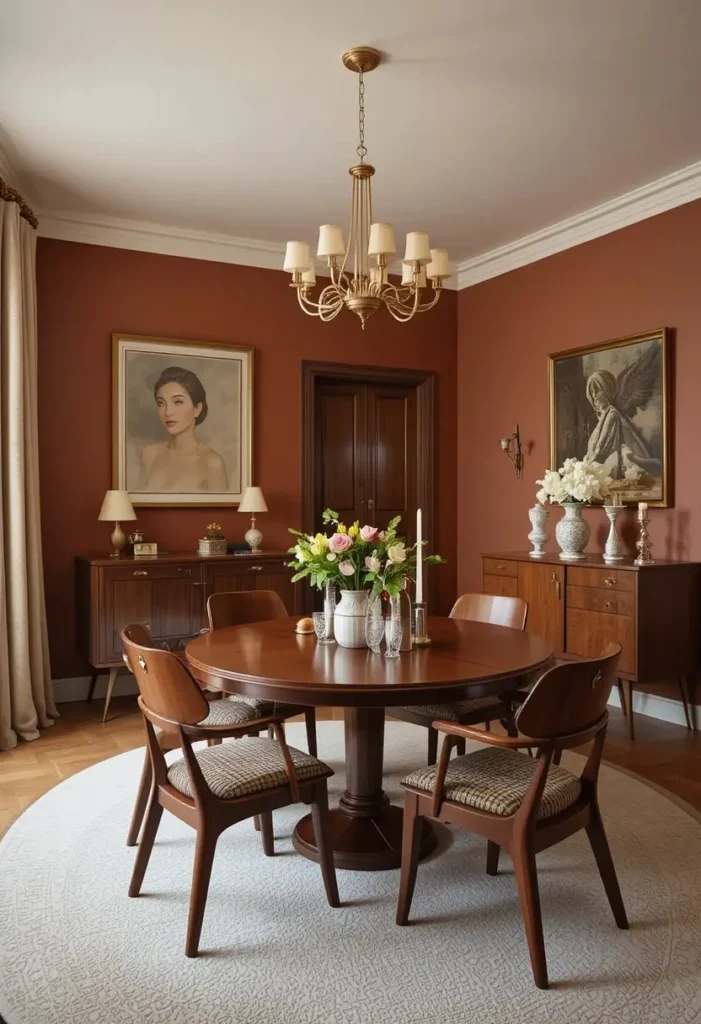
Brass is the metal of mid century modern — use it consistently and watch the room unify. Replace cabinet handles, light switch plates, curtain rods, and picture hooks with brushed or unlacquered brass versions. These small swaps cost very little individually but create a cohesive, intentional thread running through the entire room. Against walnut wood and warm walls, brass glows like something genuinely precious.
It works because consistent metal finishes are what separate a thoughtfully designed room from one that just has nice furniture in it.
Practical tip: Choose unlacquered brass where possible — it develops a natural patina over time that only gets more beautiful with age.
Mid Century Modern Dining Room With a Bar Cart
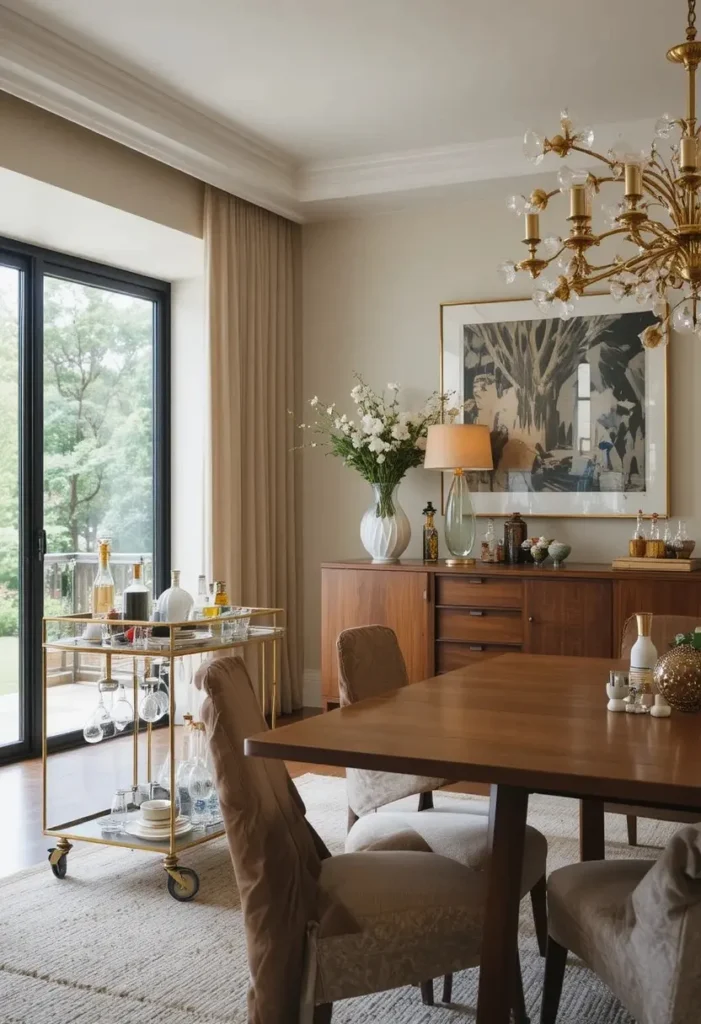
A bar cart isn’t just functional — in a mid century dining room it’s a design moment. A slim brass or gold bar cart tucked beside the credenza or against a wall holds glassware, decanters, and a small plant on top. It adds a sophisticated, grown-up layer to the room and works perfectly with the era’s love of entertaining. Choose one with two tiers and clean geometric lines to stay true to the aesthetic.
It works because a bar cart adds both practicality and personality — it signals that this dining room is a space for real gatherings and good times.
Practical tip: Keep the cart edited to 8–10 items maximum — a cluttered bar cart loses all its elegance and becomes visual noise instead.
Final Thoughts
Mid century modern never goes out of style because it was never really about trends — it was about warmth, craft, and living beautifully. Whether you start with a walnut table, swap in a Sputnik chandelier, or simply add a mustard chair, your mid century modern dining room will feel more intentional with every single change you make. You don’t need to do it all at once. Pick one idea today, build slowly, and enjoy the process. The most beautiful rooms are the ones that grow with you.