12 Japandi Kitchen Ideas That Feel Calm, Beautiful, and Completely Intentional
You walk into the kitchen and instantly exhale. No clutter. No chaos. Just clean lines, warm wood, and a quiet beauty that makes even Monday morning feel peaceful. That’s the magic of Japandi design — and your kitchen deserves that feeling. Japandi kitchen ideas blend Japanese minimalism with Scandinavian warmth into something truly special. These 12 ideas will help you create a kitchen that’s as calming as it is beautiful.
Warm Wood Cabinets with a Matte Finish
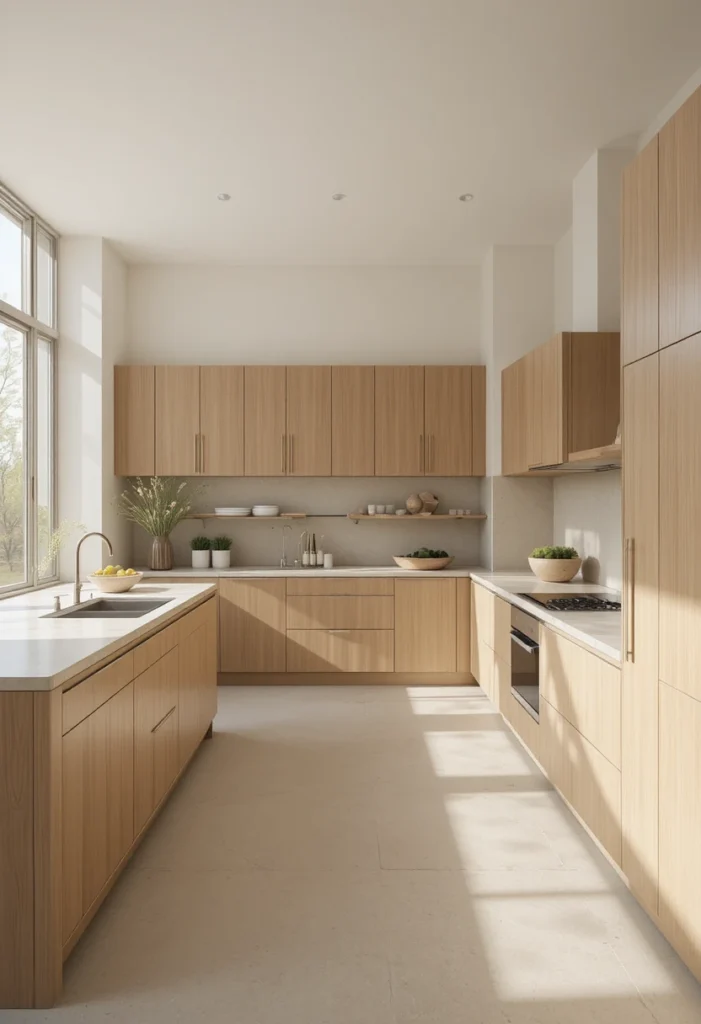
Choose flat-front cabinets in natural oak, walnut, or ash with a completely matte finish — no shine, no gloss, no fuss. The raw, understated quality of matte wood is deeply Japandi at heart.
It feels handcrafted and intentional rather than mass-produced and generic.
Tip: Avoid varnishes that create a plastic-looking sheen — opt for an oil or wax finish that lets the grain breathe naturally.
A Neutral, Earthy Color Palette
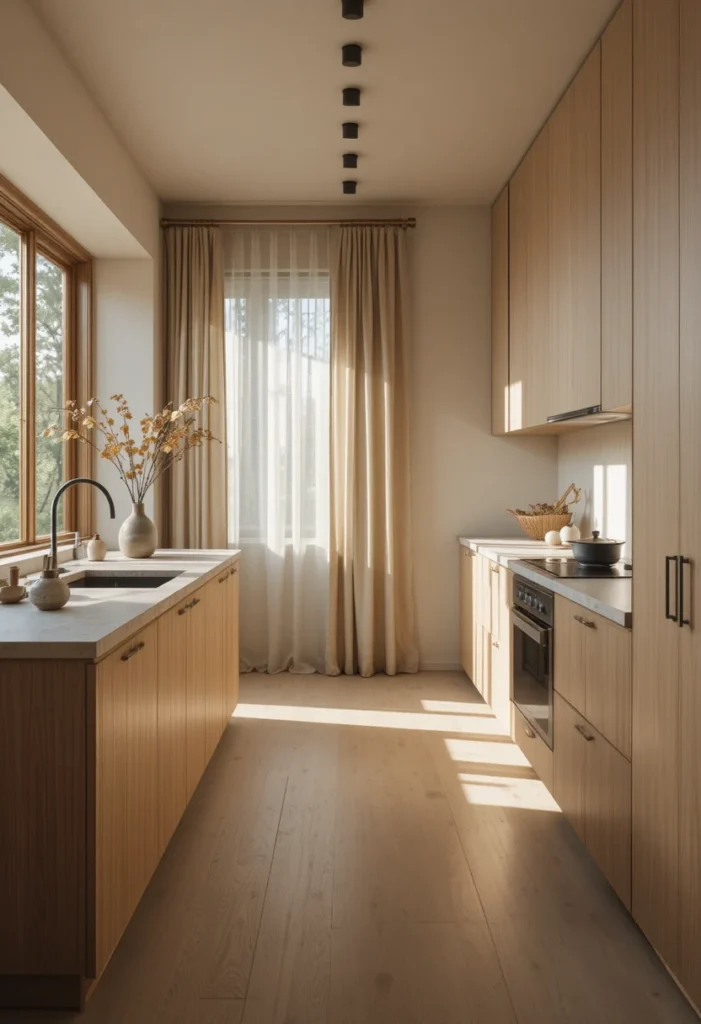
Build your entire kitchen around a palette of warm neutrals — soft clay, warm sand, stone grey, and creamy white. No bright colors, no stark contrasts. Just tones borrowed quietly from nature.
The restraint in color is what makes the whole kitchen feel so deeply calm and cohesive.
Tip: Test paint samples in natural daylight — Japandi neutrals can shift warm or cool depending on the light and time of day.
Japandi Kitchen Ideas with Open Shelving
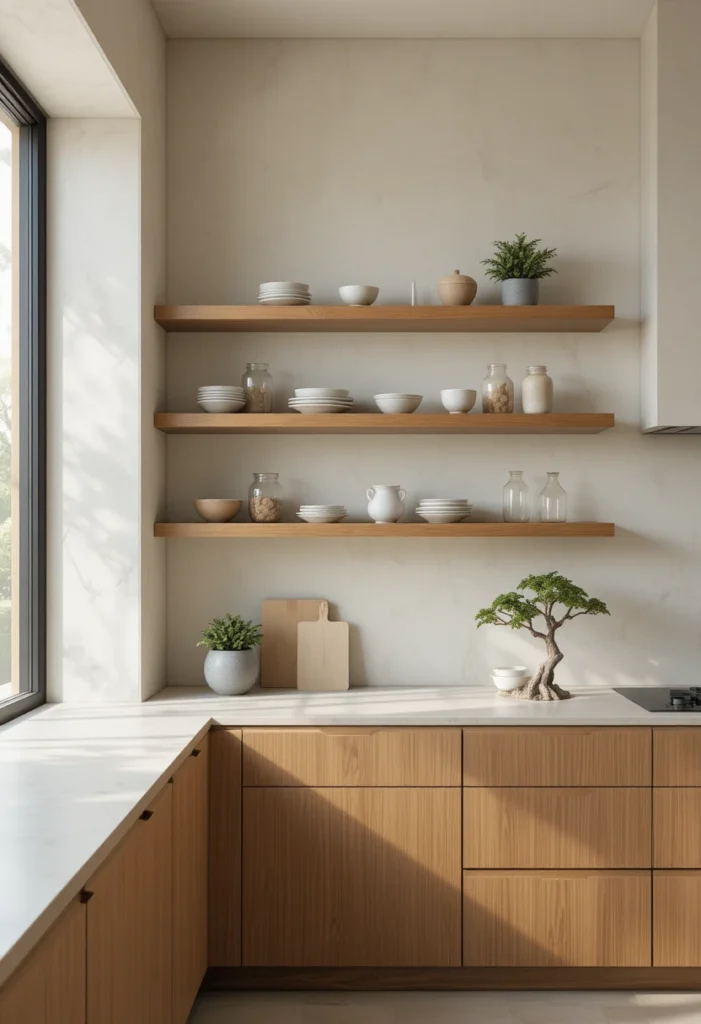
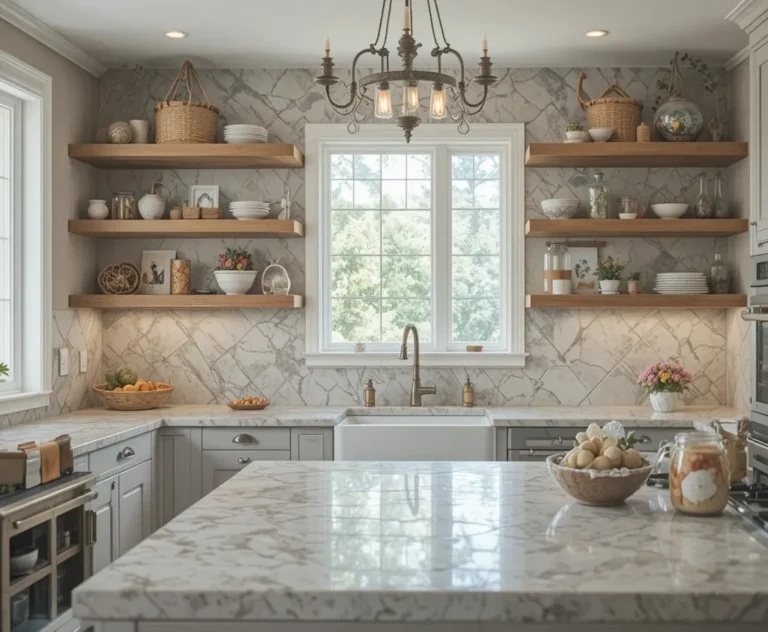
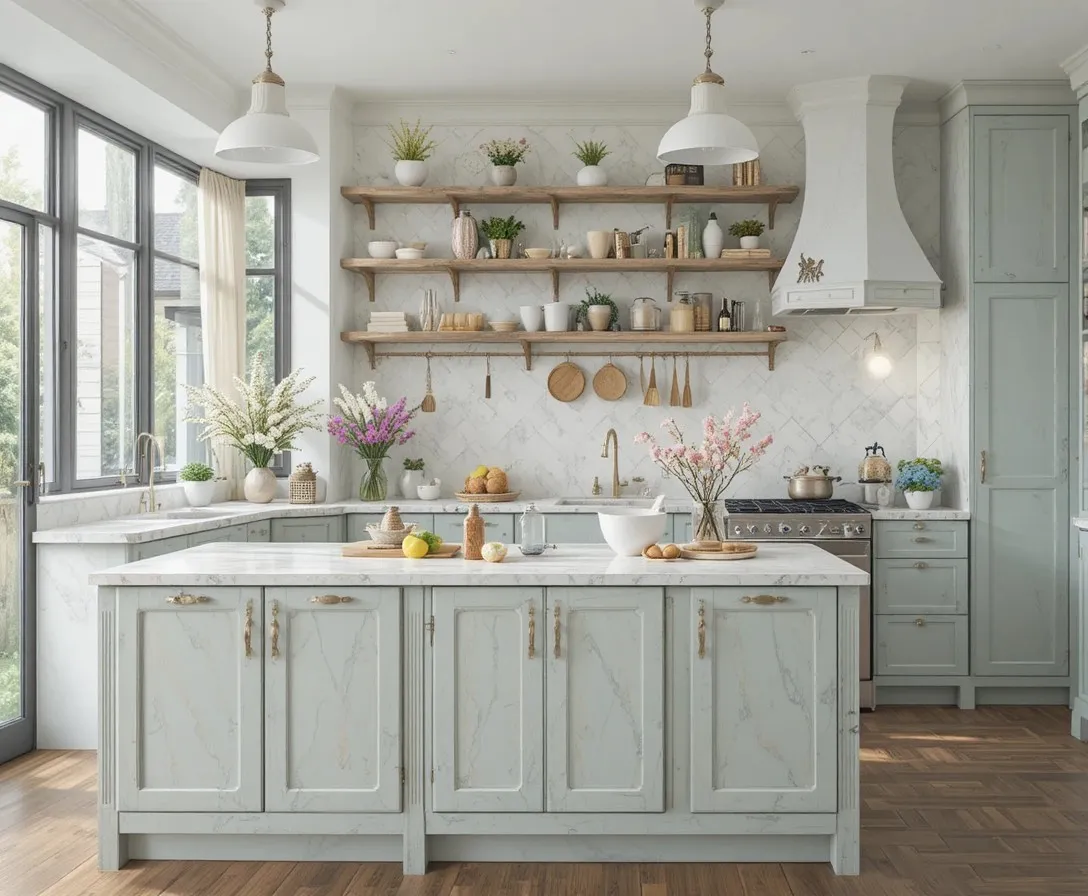
Replace some upper cabinets with simple floating shelves in natural wood or blackened steel. Display only what’s beautiful and useful — a few ceramic bowls, a small plant, neatly stacked linen napkins.
The edit is the point. Negative space is just as important as what’s on the shelf.
Tip: Style shelves with odd numbers — three items always look more natural and balanced than two or four.
Handleless Flat-Front Cabinets
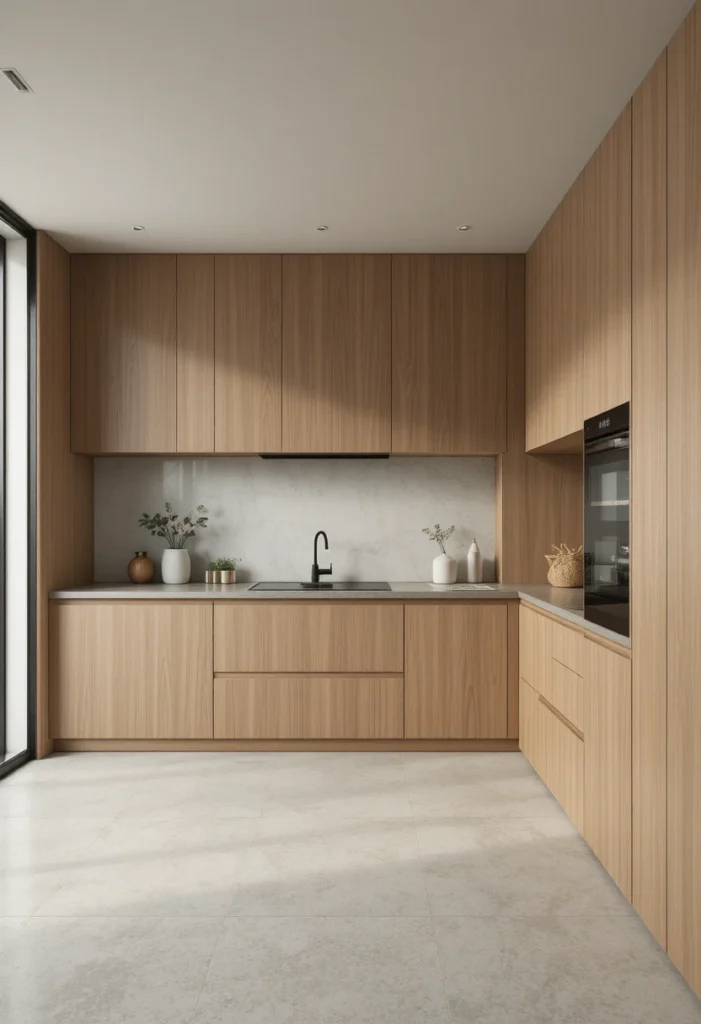
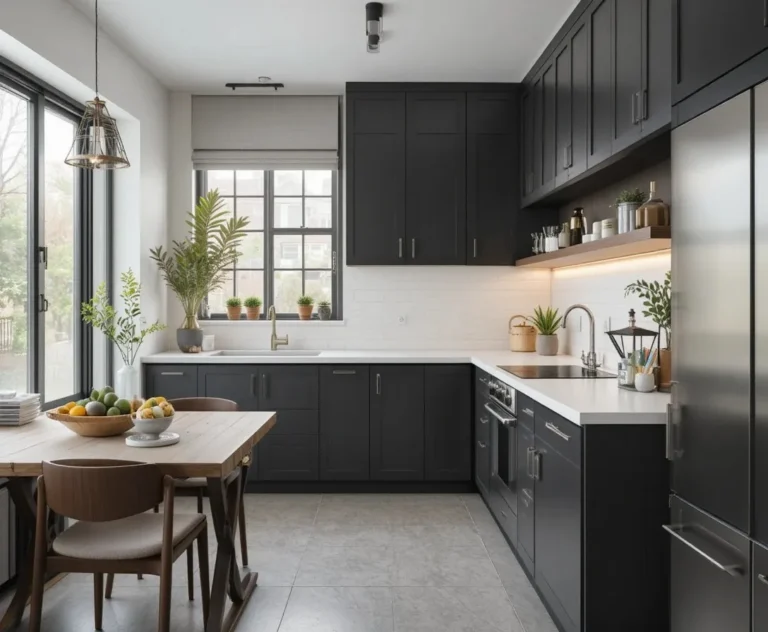
Push-to-open or integrated grip handleless cabinets create a seamlessly smooth wall of storage with zero visual interruption. It’s one of the most quietly powerful Japandi kitchen ideas available.
The unbroken surface feels meditative and intentional — like every decision was made with deep care.
Tip: Choose a touch-latch system over magnetic push systems for smoother, quieter everyday use.
Black Accents Used with Real Restraint
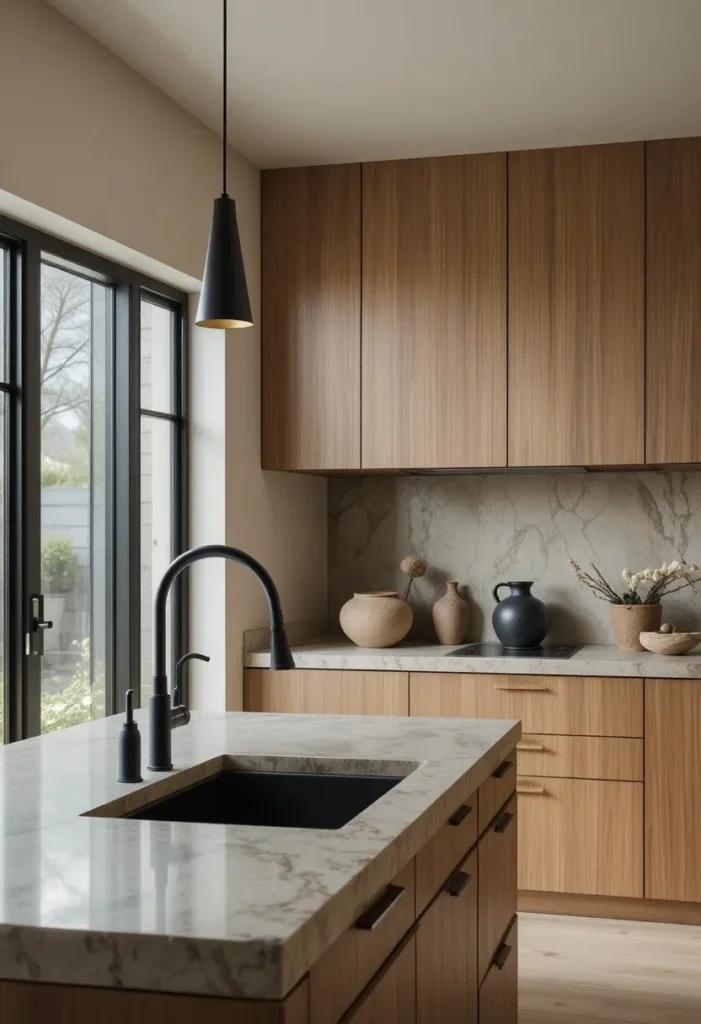
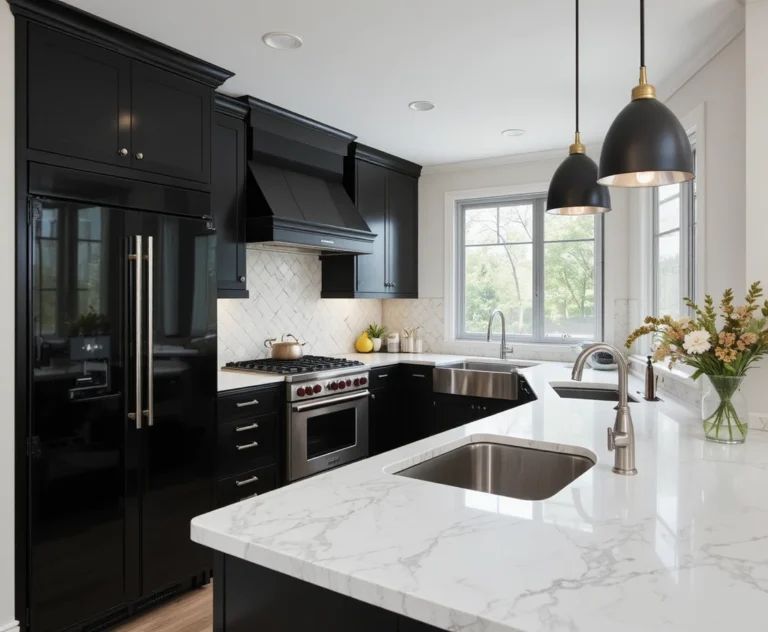
In Japandi design, black is used sparingly but powerfully — a matte black faucet, thin black window frames, or a single pendant light in blackened steel. These small dark moments anchor the warmth of the wood and neutrals around them.
Too much black breaks the calm. Just enough creates beautiful tension.
Tip: Limit black to two or three elements maximum — let each one feel deliberate rather than decorative.
Natural Stone Countertops in Muted Tones
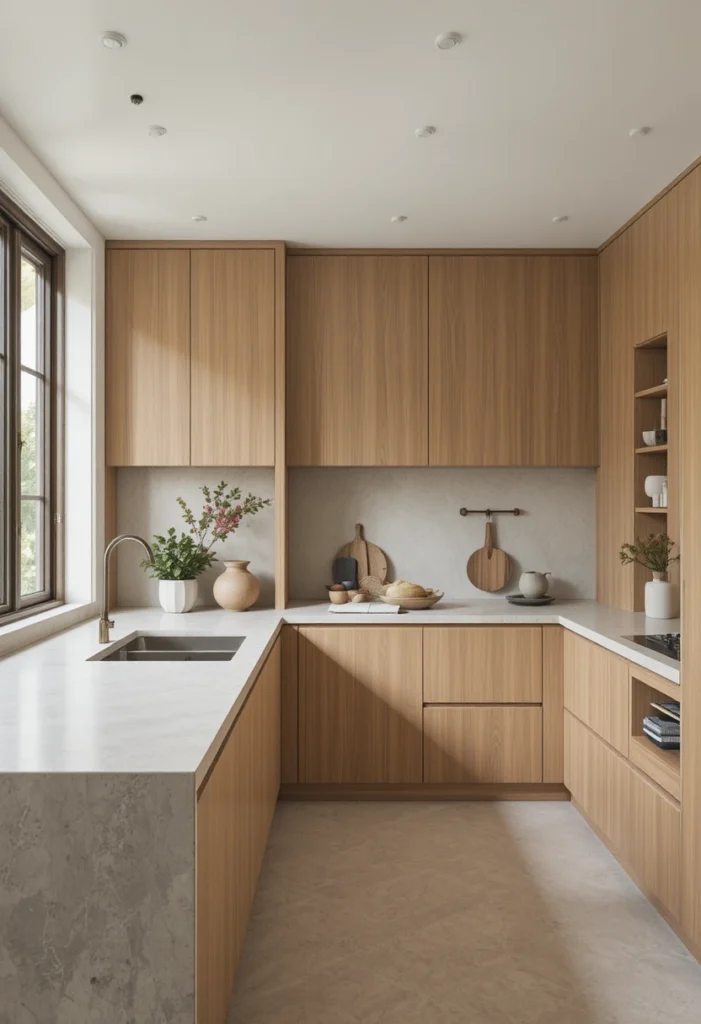
Choose countertops in honed — not polished — natural stone. Honed limestone, matte granite, or leathered quartzite in warm grey or sandy beige tones feel completely at home in a Japandi kitchen.
The matte surface absorbs light softly rather than reflecting it harshly.
Tip: Honed stone requires sealing — do it annually to protect against staining without adding unwanted shine.
Wabi-Sabi Ceramics on Display
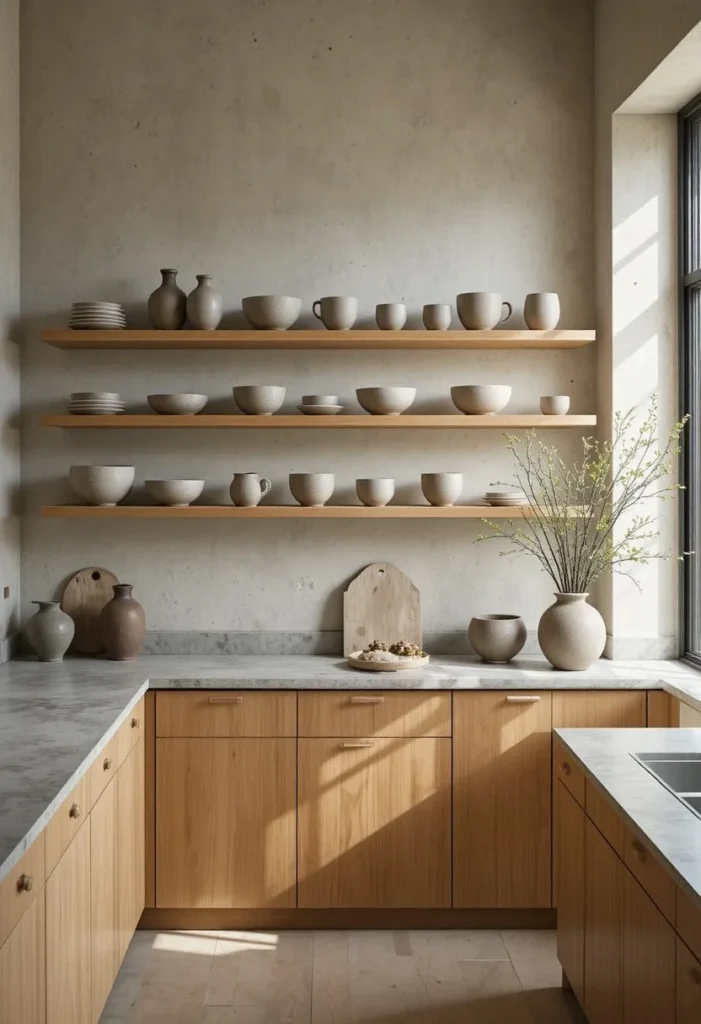
Embrace the Japanese concept of wabi-sabi — the beauty of imperfection — by displaying handmade ceramics openly. Irregular bowls, slightly uneven mugs, and hand-thrown vases add soul and humanity to a minimal kitchen.
Perfection isn’t the goal. Authenticity is.
Tip: Shop small ceramic artists online or at local markets — one-of-a-kind pieces make your kitchen feel genuinely personal.
Shoji-Inspired Cabinet Details
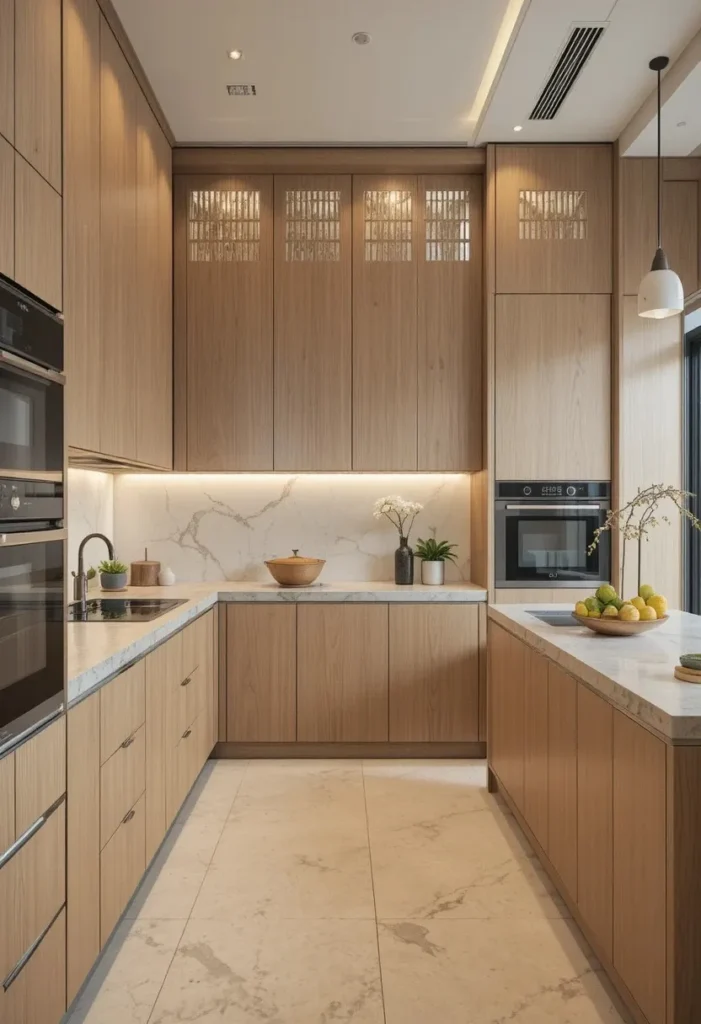
Take subtle inspiration from Japanese shoji screens by incorporating thin grid detailing into cabinet doors — simple vertical and horizontal lines inset into flat panels. It’s delicate, architectural, and unmistakably Japandi.
The detail adds visual interest without breaking the calm of the overall design.
Tip: Keep the grid lines fine and minimal — chunky or overdone grid patterns lose the delicate shoji reference entirely.
Integrated Appliances for a Seamless Look
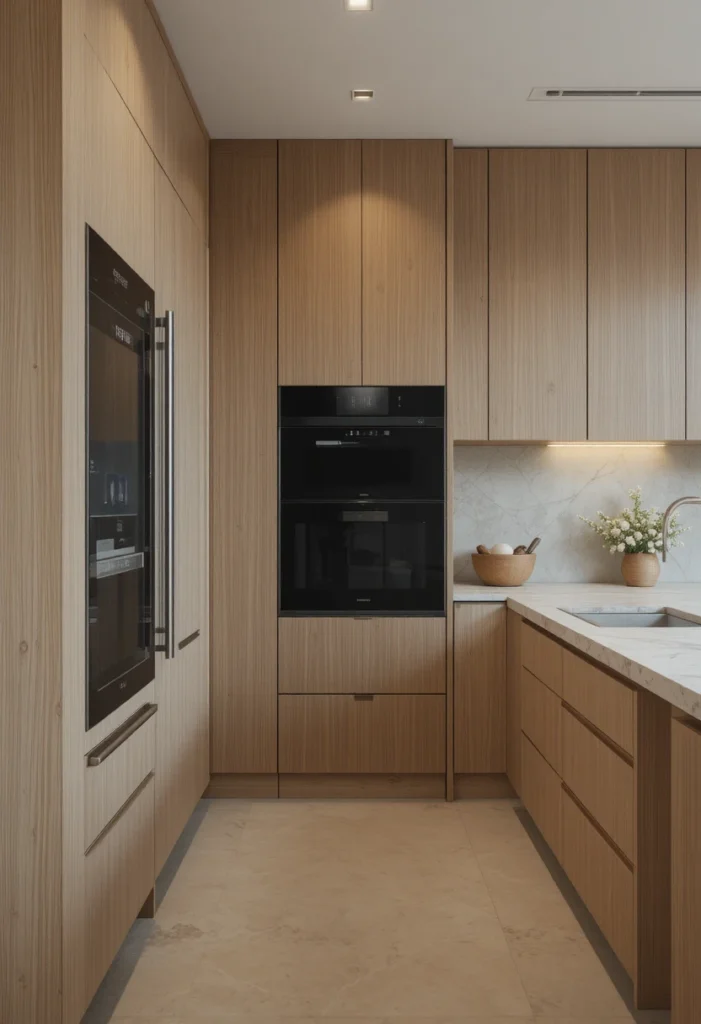
Hide your refrigerator, dishwasher, and even your microwave behind matching cabinet panels. When appliances disappear into the cabinetry, the kitchen becomes one uninterrupted, breathing surface.
It’s the single most transformative thing you can do for a truly Japandi kitchen aesthetic.
Tip: Even hiding just the refrigerator behind a panel makes a dramatic difference — you don’t have to do everything at once.
Bring Nature Indoors with Living Greenery
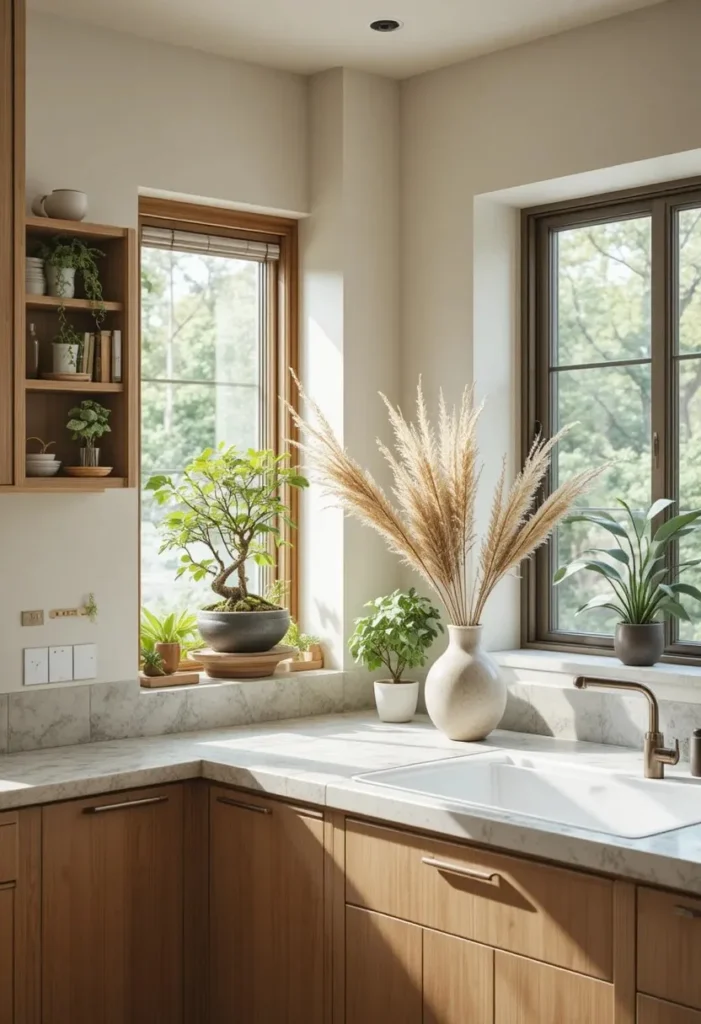
A single bonsai on the windowsill. A trailing pothos on an open shelf. A small bundle of dried pampas grass in a slim ceramic vase. Japandi design always makes space for quiet, intentional nature.
Plants soften the clean lines and remind you that the kitchen is a living, breathing space.
Tip: Choose slow-growing, low-maintenance plants — a bonsai, snake plant, or ZZ plant suits the calm Japandi lifestyle perfectly.
Layered Natural Textures Throughout
Japandi kitchens avoid feeling flat by layering textures — rough linen dish towels, a smooth stone countertop, a woven rattan pendant light, a raw wood cutting board resting on a matte tile backsplash.
Each material is natural. Each one feels different under your fingertips. Together they create quiet, beautiful depth.
Tip: Limit your material palette to four or five natural textures maximum — restraint keeps layering feeling curated rather than cluttered.
Japandi Kitchen Ideas with Warm Ambient Lighting
Forget harsh overhead fluorescent lighting entirely. A Japandi kitchen glows — warm Edison bulbs inside paper or rattan pendants, soft under-cabinet lighting washing gently over countertops, and natural daylight welcomed in through unobstructed windows.
Lighting is the mood, and in a Japandi kitchen the mood is always calm, warm, and quietly beautiful.
Tip: Install a dimmer switch on every light source — the ability to lower the light in the evening completely transforms how the kitchen feels after dark.
Final Thoughts
The most beautiful thing about Japandi kitchen ideas is that they’re not really about decorating — they’re about editing. Removing what doesn’t serve you. Choosing materials that feel honest and natural. Creating a space where every single morning feels a little slower and a little softer than it did before.
You don’t need to renovate everything at once. Start with one open shelf, one matte black faucet, one handmade ceramic bowl. Let the calm build gradually, naturally — just like the design philosophy itself asks you to.
Your Japandi kitchen is closer than you think. And once you have it, you’ll wonder how you ever cooked in chaos.